
Reviewed · MUSEUMS
Dubai Souks, Museum, Street Food Walking Tour with Hotel Transfer
Old Dubai rewards slow walking. I like the way this five-hour tour connects Al Fahidi’s lanes, Creek crossings, and traditional souks instead of treating them as separate sights. I also like that the price includes the abra ride, Dubai Museum, food tasting, and Dubai Frame, giving you a broad look at both old and modern Dubai for $68.
The main drawback is the heat and the packed schedule. You cover a lot of ground, and the food portion may be modest, with one account describing a small wrap and drink rather than a full series of tastings. Still, guides such as Francis and Hamza have earned praise for making the history easy to follow and the day fun.
In This Review
- Key things to know before you book
- Why this Old Dubai route works
- Al Seef and the first look at Dubai Creek
- Al Bastakiya and Dubai’s early architecture
- Dubai Museum and Al Fahidi Fort
- Old Souk: textiles, snacks, and bargaining
- The abra ride across the Creek
- Deira Old Souk and the Spice Souk
- The Gold Souk and the route’s final market stop
- Dubai Frame: a strong modern finish
- What $68 includes and who gets the best value
- Should you book the Dubai Souks and Dubai Frame tour?
- FAQ
- How long does the Dubai Souks and Dubai Frame tour last?
- Where does the tour start?
- Where does the tour end?
- Is the abra boat ride included?
- Is food included?
- How many people can join the tour?
Key things to know before you book
- You cross Dubai Creek by abra: The short wooden-boat ride links Bur Dubai with Deira and adds a real local transport experience to the day.
- The tour covers two different Dubais: You see old lanes, forts, textile stalls, spice merchants, and gold shops, then finish with the modern views of Dubai Frame.
- Dubai Frame entry is included: Allow about an hour for this major attraction, which gives you a clear visual contrast between older and newer parts of the city.
- The group is capped at 15 people: That is small enough for questions and easier movement through narrow market lanes.
- Food tasting is light rather than a full meal: Expect a local snack and drink, but do not book this as a dedicated food tour.
- The route starts at Al Seef and ends near the Gold Souk: Hotel pickup is offered, but check the exact pickup and final drop-off details before setting out.
Why this Old Dubai route works
Dubai is famous for glass towers, shopping malls, and engineered spectacle. This tour gives you a useful counterpoint. For several hours, you walk through the older districts beside Dubai Creek, where trade, boats, markets, and courtyard houses explain how the city functioned before its modern boom.
I like the route because it has a clear geographic logic. You begin on the Bur Dubai side of the Creek, visit Al Fahidi and the old markets, then cross to Deira for the Spice Souk and Gold Souk. Dubai Frame is included as a final look at the city from above.
The experience begins at Al Seef Heritage Hotel Dubai. Pickup is offered, but the stated meeting point is this hotel, so you should confirm the arrangement when booking. The activity lasts about five hours and accepts a maximum of 15 people. That matters in Al Fahidi, where small lanes and busy market passages are far easier to manage in a modest group than with a large coach party.
The tour is best understood as a guided introduction rather than a leisurely, in-depth museum visit. You will see many places in one morning or afternoon, but you will not have unlimited time at any one stop.
More Museums in Dubai:
- Dubai: Museum of the Future Admission Ticket
★ 4.3 · 21,464 reviews - Dubai: Old Town, Creek, Museums, Souks, & Street Food Tour
★ 4.8 · 10,816 reviews - From Dubai: Abu Dhabi Grand Mosque & Louvre Museum Full-Day
★ 4.8 · 6,227 reviews
Al Seef and the first look at Dubai Creek
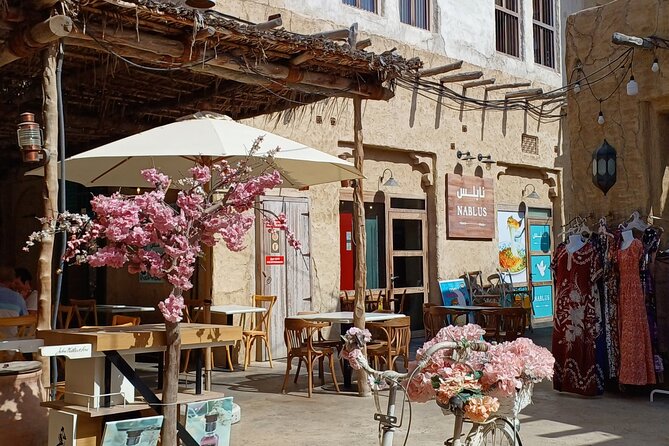
Al Seef stretches for about 1.8 kilometers along the Creek. Its heritage-style buildings are designed to resemble old Dubai, so you should know that this is a modern recreation rather than an untouched historic quarter.
That does not make it useless. Al Seef gives you an easy starting point, with views toward the water, restaurants, and a pleasant sense of the city’s older visual style. It is also a practical place to begin because the Creek is right beside you, and the guide can set up the story of Dubai as a trading port.
The tour allows about 30 minutes here. I would use that time for photographs and orientation rather than shopping. The area is attractive and polished, but the more convincing old-Dubai experience comes later in Al Fahidi and the souks.
You then spend about 20 minutes walking beside Dubai Creek. The waterway separates Bur Dubai from Deira, and it remains the key physical feature of this part of town. From the banks, you can watch the steady movement of traditional abras and see the city from a lower, more human scale than you get from the main roads.
Al Bastakiya and Dubai’s early architecture
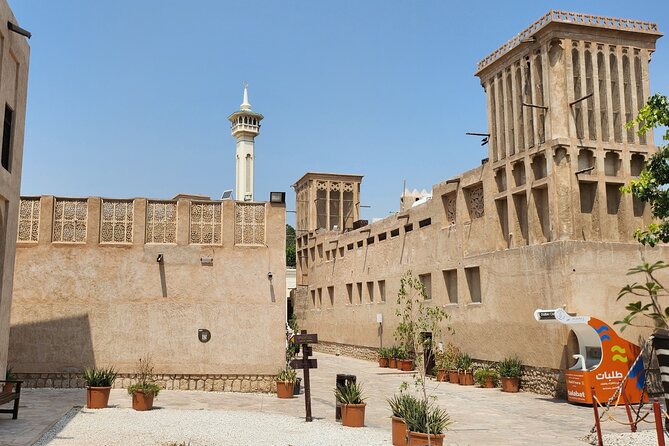
Al Bastakiya, also called the Al Fahidi Historic District, is one of the most appealing parts of the route. Its narrow lanes, courtyard buildings, galleries, and cultural spaces offer a welcome change from Dubai’s wide highways and tall towers.
The district is valued for its traditional architecture and quieter pace. Look for the wind towers, which reflect older methods of cooling buildings before modern air conditioning. The short 20-minute visit will not allow you to inspect every gallery, but it gives you enough time to appreciate the layout and ask questions.
This is also where a good guide makes a real difference. The strongest part of the guiding is not simply pointing out old walls. It is explaining how homes, trade, religion, and hospitality fit together in the older city. Francis was praised for discussing history and politics while keeping the mood light, and Hamza was singled out for making the day informative and enjoyable.
If you want a long photography session, the schedule may feel tight. I would stay close to the guide here, since the value comes from the explanation as much as the buildings.
Dubai Museum and Al Fahidi Fort
The next stop is Dubai Museum and Al Fahidi Fort, described as Dubai’s oldest building, dating from the 1780s. The fort’s original defensive purpose helps you picture the small settlement that existed before Dubai became a global business center.
The tour allows 30 minutes. That is enough for a focused visit, though not for a slow examination of every display. The museum stop works best when you connect it with what you have already seen: the Creek, the traditional homes, and the trading districts.
I would pay attention to the shift in scale. The fort is compact and sturdy, while the city outside it is enormous and modern. That contrast is one of the tour’s central lessons. Dubai’s transformation becomes easier to understand when you first see the physical setting of its earlier life.
One piece of practical advice: bring questions. The guiding can be strong, but one lower-rated experience described a guide who did not answer questions well and used a joke about women’s face coverings instead of offering a proper explanation. Cultural subjects deserve clear answers, and you should expect the quality of the commentary to depend on the individual guide assigned that day.
More Walking Tours in Dubai:
- Dubai: Private Old Town, Heritage & Souks Walking Tour
★ 4.9 · 102 reviews - Dubai: Old City Walking Tour with Abra Ride
★ 5.0 · 101 reviews - Dubai: Old Town Walking Tour with Abra Cruise & Street Food
★ 4.9 · 71 reviews - Dubai: Walking, Architecture and History Tour of Dubai Opera
★ 4.9 · 40 reviews
Old Souk: textiles, snacks, and bargaining
The Old Souk is the place to test your bargaining skills. Its stalls focus on textiles, shawls, and local snacks, giving you a more commercial experience than Al Fahidi.
You may find colorful fabrics and small food items here, but the market is also a lesson in how shopping works. Prices are not always the final word, and browsing is part of the experience. If you plan to buy something, decide what it is worth to you before bargaining. A friendly, firm approach usually works better than treating the exchange as a contest.
The tour allows 30 minutes. That is enough to look around and perhaps make a small purchase, but not enough for a long shopping expedition. If buying textiles is your main goal, you may want to return later on your own.
This stop also helps explain why the Creek matters. The markets are not isolated attractions. They grew around movement, trade, and exchange between the two sides of the water.
The abra ride across the Creek
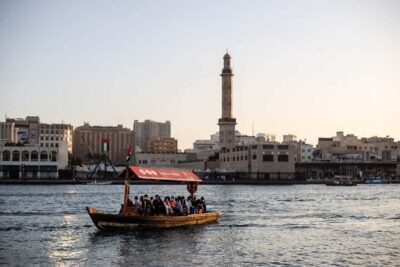
At Bur Dubai Abra Dock, you board a traditional wooden abra for the crossing to Deira. The ride takes about 25 minutes in the schedule, including time around the dock, and the boat fare is listed as free.
This is one of the most memorable parts of the outing because it is simple. The abra’s engine, the sound of water beside the dock, and the views along the Creek create a welcome break from walking. You get a better sense of the distance between Bur Dubai and Deira than you would from a road transfer.
The ride also gives you a chance to cool down, though you should not count on a long rest. The overall schedule keeps moving, and the Deira markets come next.
If you are visiting Dubai during very hot weather, the heat deserves serious thought. One person found the day so hot that air-conditioned buildings became a major refuge. Wear light clothing, use sun protection, and carry water. The tour is walk-heavy, even though it includes transport by boat.
Deira Old Souk and the Spice Souk
After crossing the Creek, you arrive at the Deira Old Souk Abra Station. This is the gateway to the Spice Souk and Gold Souk, with plenty of photo opportunities along the way.
The Spice Souk is the most sensory stop. You can expect sacks, jars, and displays of spices, herbs, and other market goods. The guide’s role is especially useful here because merchants may approach you, and it can be difficult to browse without feeling pressured. The tour promises guidance through the market and advice about shopping at fair rates.
I like having the guide beside me in a place like this. You can ask what a spice is used for, how it is sold, and what makes one product different from another. The point is not just to buy souvenirs. It is to understand the market as a working place.
Food tasting is included, but keep your expectations sensible. The tour information presents it as a local tasting, while one account described only a small wrap and a drink and felt there was not much tasting at all. I would treat the food as a snack, not lunch. If you need a full meal, plan for one separately.
The Gold Souk and the route’s final market stop
The Gold Souk is a dramatic change from the spice market. Shop windows display large quantities of gold jewelry, and the sheer scale of the jewelry trade makes this a strong photo stop even if you have no intention of buying.
The tour allows about 30 minutes. That is enough to walk through, compare styles, and learn how the market works. It is not enough for a relaxed jewelry-shopping session, especially if you need time to discuss designs, prices, or customs requirements.
Use common sense here. You do not need to buy anything, and browsing is fine. If you are considering a purchase, ask the guide for general advice, but make your own decision and keep receipts for anything you buy.
The stated route ends by the Gold Souk in Deira, while Dubai Frame is also part of the experience later in the schedule. Because the published sequence can read as slightly unclear, confirm how the transfer to Dubai Frame works and where the day finally ends. This is a small planning point, but it matters if you have an evening flight, dinner booking, or another activity.
Dubai Frame: a strong modern finish
Dubai Frame is designed as the world’s largest frame, with views that place older and newer Dubai on opposite sides. The attraction gives the day a useful conclusion: you have just walked through the districts that shaped early Dubai, and now you can look across the city’s modern growth.
The visit lasts about an hour, the longest single stop on the route. That is sensible. You need time to take in the views and understand the visual contrast rather than simply rush up, take one photograph, and leave.
The Frame was the most praised sight in one account, described as incredible, while the Gold Souk also made a strong impression. I agree that this final stop adds value to the tour. Without it, the day would focus almost entirely on old Dubai. With it, you see how dramatically the city has changed.
The Frame is not a substitute for a full city sightseeing tour, and it does not explain every part of Dubai. Its value is more focused: it gives you a clear before-and-after view of the city and a memorable last stop.
What $68 includes and who gets the best value
At $68 per person, this is a fair bundled price if you want a guided introduction to Old Dubai. The value comes from combining several paid and included elements: Dubai Museum, Dubai Frame, the food tasting, the abra crossing, and guided visits to the markets.
You are also paying for the convenience of having the route explained and connected. On your own, you could visit these districts for less, but you would need to organize the order, navigate between stops, manage market approaches, and arrange separate admission to the attractions.
I would book this tour if you have limited time in Dubai and want one organized outing that covers both sides of the Creek. It also suits first-time visitors who want cultural context instead of spending the whole trip in malls or modern towers.
I would think twice if you want a slow food crawl, serious shopping time, or long museum visits. The schedule is full, the food portion may be small, and the heat can make the walking tiring. The 15-person limit helps, but it does not turn a five-hour route into a relaxed half-day stroll.
The activity is booked, on average, about 17 days ahead, so planning early is sensible if your dates are fixed. Confirmation is provided at booking, and free cancellation is available up to 24 hours before the start time. Changes or cancellations within 24 hours are not refunded.
Should you book the Dubai Souks and Dubai Frame tour?
You should book this tour if you want Old Dubai in one efficient, guided route. The best parts are the Al Fahidi lanes, the abra crossing, the Spice Souk, and the view from Dubai Frame. Guides such as Francis and Hamza can add real personality and useful context.
You should skip it if food is your main reason for booking or if you dislike heat, walking, and a quick pace. For most first-time visitors, though, the $68 price is reasonable because it joins the Creek, museum, souks, boat ride, snack, and Dubai Frame in a single outing. Confirm the pickup and final transfer details, carry water, and arrive ready to bargain politely.
FAQ
How long does the Dubai Souks and Dubai Frame tour last?
The experience lasts approximately five hours.
Where does the tour start?
The stated starting point is Al Seef Heritage Hotel Dubai, Curio Collection by Hilton. Pickup is offered, so confirm the exact pickup arrangement when booking.
Where does the tour end?
The route information states that the tour ends by the Gold Souk in Deira. Since Dubai Frame is also included, confirm the final transfer and drop-off details before the day begins.
Is the abra boat ride included?
Yes. The tour includes a traditional abra crossing from Bur Dubai to Deira, and the boat ride is listed as free.
Is food included?
Yes, a food tasting is included at the Spice Souk. The available description indicates that it may be a small snack and drink rather than a full meal or a long series of tastings.
How many people can join the tour?
The group has a maximum of 15 participants.
More Private Drivers in Dubai
- Dubai Evening Desert Safari BBQ Dinner & Transfer to Noble Camp
★ 5.0 · 4,365 reviews - Premium Desert Safari Sharing Transfer with 5* Unlimited Buffet
★ 5.0 · 1,571 reviews - Burj Khalifa Ticket with 1-Way Transfer
★ 4.4 · 1,322 reviews - Dubai Airport Private Departure and Arrival Airport Transfer
★ 5.0 · 1,138 reviews
More Food and Drink Tours in Dubai
- Dubai: Old Town, Souks, Street Food, Guided Tour & Abra Ride
★ 4.9 · 7,170 reviews - Dubai: Old Town, Souks, Street Food, Guided Tour & Abra Ride
★ 5.0 · 1,664 reviews - Dubai: Old Town, Street Food, Creek, Souks, & Emirati House
★ 4.9 · 1,496 reviews - Old Dubai tour: Local Market, Tasting, Dubai creek with Abra ride
★ 5.0 · 834 reviews
Just added around Dubai
- Abu Dhabi and Ferrari World Tour★ 3.5 · 9 reviews
- Premium Desert safari With Dune buggy camel ride BBQ dinner★ 5.0 · 36 reviews
- Night City Tour of Dubai★ 4.5 · 14 reviews
- FLYBOARD 30mn session @ POPEYE JETSKI★ 5.0 · 80 reviews
- Sky Views Dubai with Options★ 4.5 · 17 reviews
- Full Day Hatta Mountain Tour from Dubai★ 5.0 · 23 reviews
- Dunes Safari Sandboarding and Photography in Desert★ 5.0 · 47 reviews
- Dubai Sunrise / Morning private safari tour★ 5.0 · 18 reviews
Museums, compared.
Old Town, Creek, Museums, Souks, & Street Food Tour
Read our review →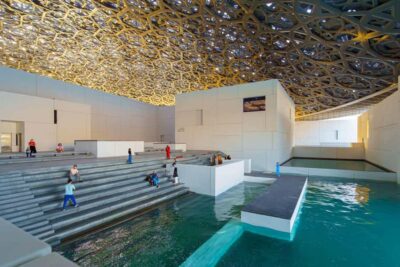
Abu Dhabi Grand Mosque & Louvre Museum Full-Day
Read our review →

Abu Dhabi Day Tour with Grand Mosque & Louvre Museum
Read our review →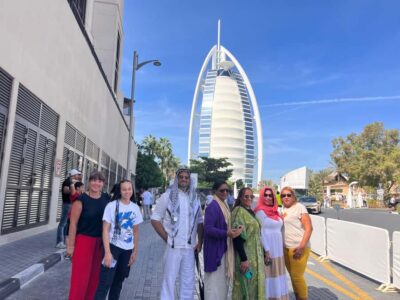
Future Museum, Burj Al Arab, and Dubai Frame Tour
Read our review →
Also listed under