
Reviewed · HISTORICAL TOURS
Dubai: Private Old Town, Heritage & Souks Walking Tour
Old Dubai tells the city’s first chapter. This two-hour private walk links the Al Fahidi Historical Neighborhood with Dubai Creek, an abra crossing, and the spice and gold souks. I like the way it shows Dubai before the skyscrapers, and I like that the boat ride is part of the route rather than an extra add-on. You also get heritage-house entrances, spice tastings, and a small souvenir gift included in the $98 price.
The main thing to consider is the short running time. Two hours is enough for a well-planned introduction, but not enough for long shopping stops or a slow look at every museum and lane. The walk is not suitable for wheelchair users, and you will need comfortable shoes, sunscreen, and a willingness to handle souk sales talk. Guides such as Pri, Ricky, Francesca, Dana, and Ricardo have been praised for clear explanations, patience with children, and practical help with bargaining.
In This Review
- Key Points Before You Book
- Why Old Dubai Makes the Better Starting Point
- Meeting at Arabian Tea House in Al Fahidi
- Al Bastakiya: Forty Minutes of Dubai Before the Towers
- Reaching Dubai Creek and the Dhow
- The Abra Ride Across the Creek
- Spice Souk: Smells, Samples, and Shopping Advice
- The Old Textile Market and the Gold Souk Finish
- What $98 Per Person Buys You
- Families, Language, Pace, and Comfort
- Who Should Book This Old Dubai Walk?
- Should You Book It?
- FAQ
- Where does the Dubai Old Town walking tour begin?
- Where does the tour finish?
- Is the abra ride included?
- What is included in the $98 price?
- Is hotel pickup and drop-off included?
- Is the tour available in English?
Key Points Before You Book
- Starts at Arabian Tea House: Meet outside the restaurant in Bastakiya, within the Al Fahidi Historical Neighborhood.
- Private English or Hindi guide: Your guide can adjust the pace and explanations to your group, including families with young children.
- Old Dubai in one compact route: See Al Bastakiya, heritage houses, narrow sikkas, Dubai Creek, and Deira’s markets.
- Traditional abra crossing included: The simple wooden boat ride gives you a direct look at daily movement across the Creek.
- Shopping help is part of the experience: Your guide can explain souk customs, help with bargaining, and point out places to compare prices.
- Ends at the Gold Souk: There is no hotel pickup or drop-off, so plan your next ride from the Deira side.
Why Old Dubai Makes the Better Starting Point
Dubai is easy to experience as a city of towers, malls, artificial islands, and polished hotels. Those sights are real, but they do not explain how a small desert trading town became a global destination. This walk begins with the older story: homes, trade, boats, pearl diving, local customs, and the people who built lives around the Creek.
I find that context useful early in a Dubai visit. Once you have seen the old lanes and working markets, the scale of modern Dubai makes more sense. The tour connects the city’s past to its present instead of treating Old Dubai as a separate attraction with no link to the rest of the emirate.
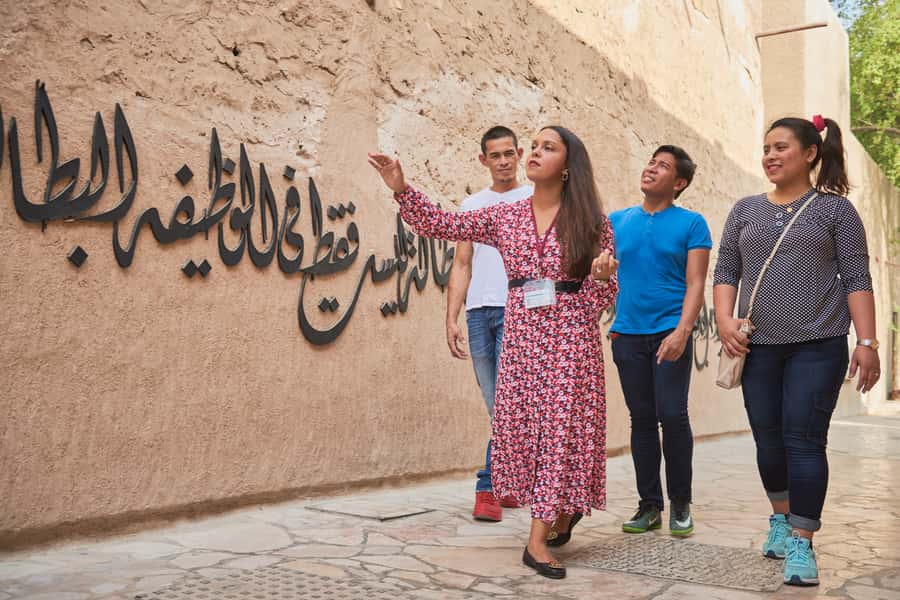
The private format matters here. Old Dubai is made up of narrow passages, courtyard houses, market lanes, and busy crossings. A guide can pause when you have a question, shorten a discussion when children lose interest, or spend more time on the parts that catch your attention. Pri was especially well liked for engaging children and adapting her explanations for teenagers and younger children.
A few more Dubai trips worth comparing
- Dubai Evening Heritage Safari by Vintage G Class Al Marmoom Oasis
★ 5.0 · 1,500 reviews - Dubai Camel Desert Safari, Traditional Meal & Heritage Activities
★ 5.0 · 937 reviews - Dubai: Heritage Safari in Vintage Land Rover with Dinner
★ 4.8 · 861 reviews
Meeting at Arabian Tea House in Al Fahidi
The meeting point is outside Arabian Tea House Restaurant and Cafe in Bastakiya, part of the Al Fahidi Historical Neighborhood. This is a useful location because you begin in the old district rather than spending the first part of the tour finding it.
You should arrive ready to walk. The tour moves through streets and lanes, and the heat can make even a short route feel longer. Comfortable shoes and sunscreen are specifically recommended. Bring water as well, since no hotel transport is included and the tour takes place outdoors for much of its duration.
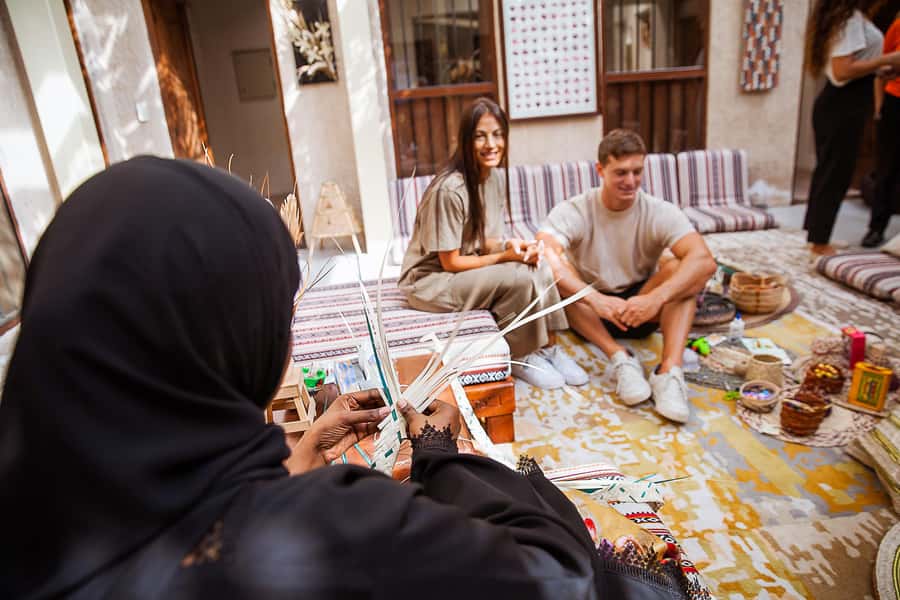
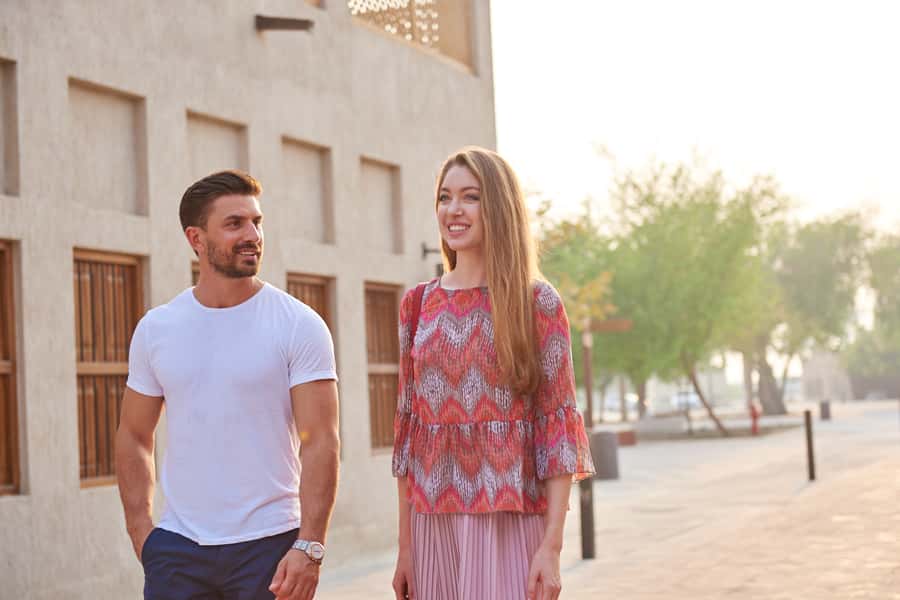
The Al Fahidi area gives you a calm opening to the tour. Its courtyard houses, shaded passages, wind-tower forms, and restored buildings offer a useful contrast with Dubai’s glass towers. The guide’s job here is not simply to point at old walls. The better guides explain how these homes were arranged, how the district developed, and what early life was like in a trading town beside the Creek.
Al Bastakiya: Forty Minutes of Dubai Before the Towers
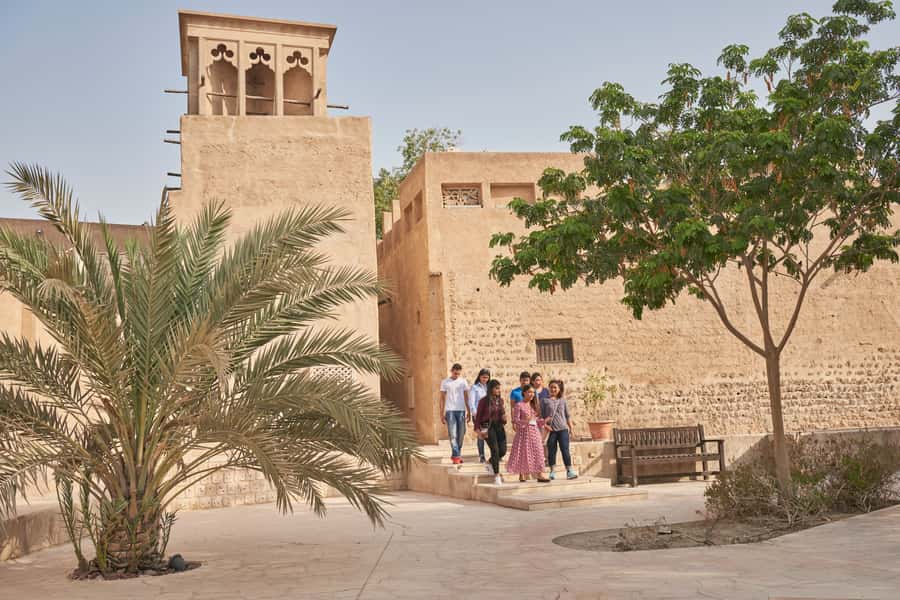
The longest part of the itinerary is the roughly 40-minute guided visit through Al Bastakiya, also known as the Bastakiya District. That length is sensible. The neighborhood rewards a slow walk, and rushing through it would turn the experience into a series of photographs with little meaning.
You pass through old courtyard houses and narrow sikkas, the local term for lanes. The route includes Dar Al Nadwa and XVA House, along with heritage buildings and former residential spaces. These stops help show how the district worked as a place to live, meet, trade, and shelter from the desert climate.
I particularly like the focus on early Dubai. The city’s modern wealth can make its older way of life feel distant, but the guide brings the change into human scale. You hear about a town shaped by trade, the sea, pearl diving, and ties across the region. The story then moves forward to Dubai’s present success, giving you a simple timeline rather than a pile of disconnected facts.
The guides receive repeated praise for making this section easy to follow. Pri has been described as warm and engaging, while Francesca was praised for explaining UAE history, customs, culture, and modern art in a welcoming way. Ricky is noted for giving clear explanations about Dubai’s cultural development. Names are not guaranteed when you book, but the repeated strength of the guide team is one reason this experience has earned a 4.9 rating from 102 reviews.
Reaching Dubai Creek and the Dhow
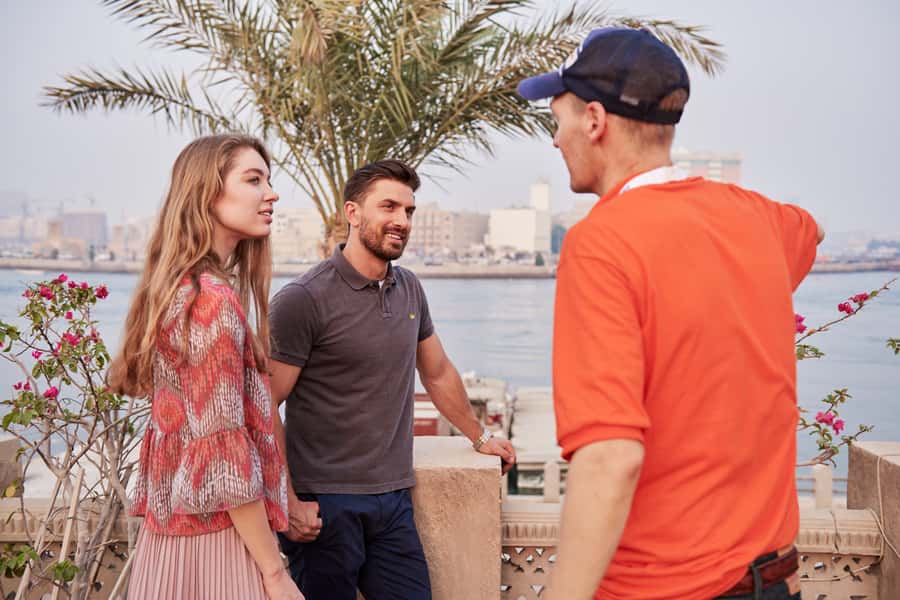
After Al Fahidi, the route heads toward Dubai Creek. The Creek is not just a scenic waterway. It is the reason this part of Dubai grew into a center of exchange, with boats, goods, merchants, and people moving between the two sides.
The itinerary allows about 15 minutes for the Creek, followed by about 10 minutes around a dhow. These are short stops, so think of them as orientation and sightseeing rather than a full boat museum visit. Your guide can explain the role of traditional vessels and show how the water shaped the city’s growth.
This is also where the tour begins to feel more active. You have moved from quiet historic lanes to the open waterfront, with views across the Creek and boats passing through. The setting gives you a welcome pause before the market section.
More Walking Tours in Dubai:
- Dubai: Old City Walking Tour with Abra Ride
★ 5.0 · 101 reviews - Dubai: Old Town Walking Tour with Abra Cruise & Street Food
★ 4.9 · 71 reviews - Dubai: Walking, Architecture and History Tour of Dubai Opera
★ 4.9 · 40 reviews - Local Street Food and Guided Walking Tour of Dubai Old Town
★ 5.0 · 37 reviews
The Abra Ride Across the Creek
The abra ride is one of the strongest parts of the tour. An abra is a traditional boat used to cross Dubai Creek, and here it carries you from the Bur Dubai side to Deira. The crossing is brief, but it changes your view of the city immediately.
From the water, you see the Creek as a working route rather than a line on a map. The ride also gives you a break from walking and a chance to take photographs. Several guides have made the crossing a memorable part of the experience, including one sunset ride that was praised for its views.
Do not expect a long private cruise. This is a practical traditional boat crossing, and that is precisely its appeal. It connects the two halves of the itinerary while giving you a small, authentic slice of local transport. The ride is included in the price, so you do not need to arrange or pay for it separately.
Spice Souk: Smells, Samples, and Shopping Advice
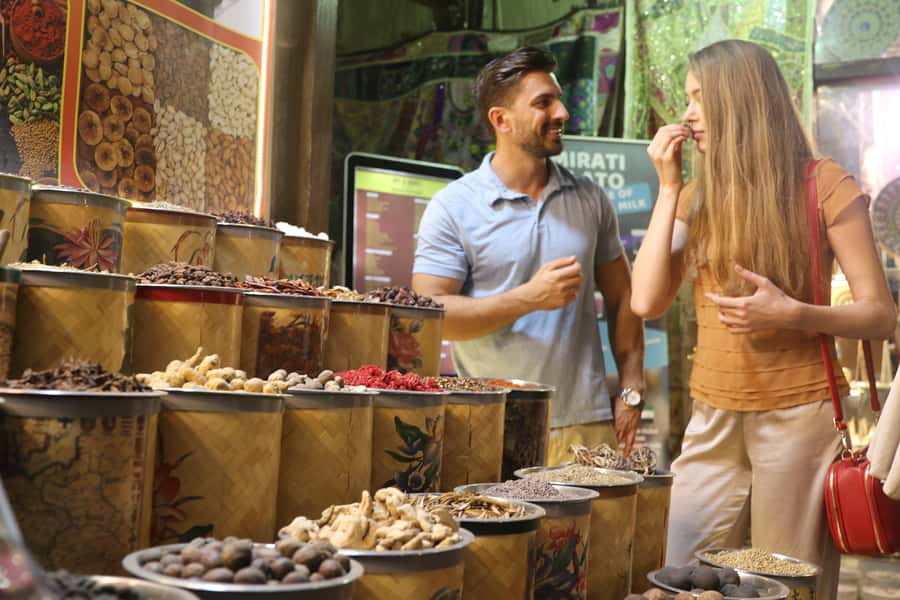
On the Deira side, the tour takes you through the Spice Souk. The itinerary gives this section around 15 minutes for a guided visit, shopping, and tastings. That is enough to introduce the market and sample a few items, but you will need to keep your shopping focused if you want to stay with the group.
This is where a private guide can save you time and confusion. Souk sellers are friendly and persistent, and prices may not always be clear at first glance. Guides such as Pri and Dana have helped visitors understand bargaining and locate better deals. Dana was also praised for showing good places to shop for spices and gold.
I would use this part of the walk to learn before buying. Ask what an item is, how it is used, and what a reasonable comparison might involve. Tasting spices gives the market more meaning than simply looking at colorful sacks. You can still shop for inexpensive gifts and food items, but the guide helps you avoid making every purchase on impulse.
Keep in mind that buying is optional. The tour is not only a shopping trip, and you should never feel obliged to purchase from a shop suggested during the route. Your guide can offer advice, but you remain responsible for checking prices and choosing what suits you.
The Old Textile Market and the Gold Souk Finish
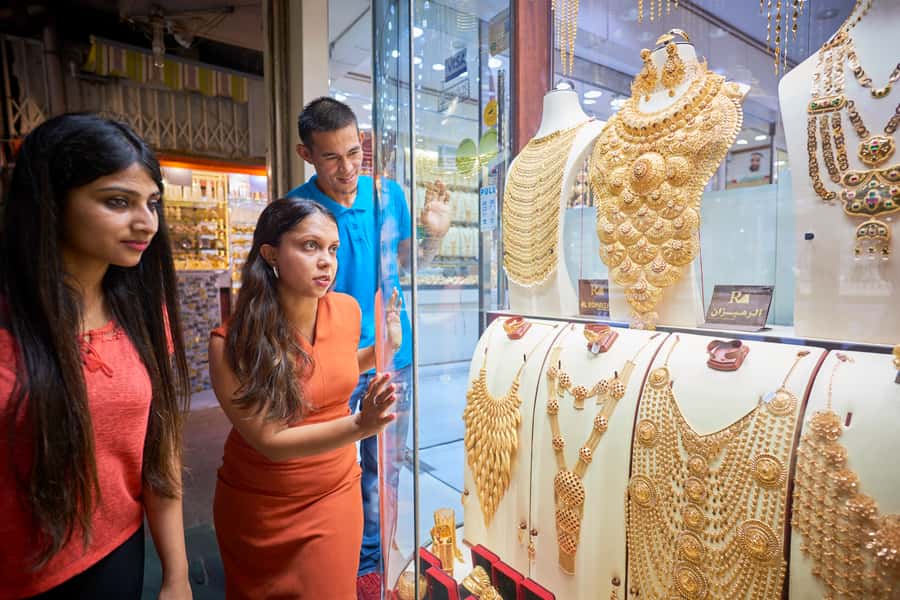
The route also includes the Old Textile Market, with about 15 minutes set aside for visiting and shopping. Depending on the exact movement through the markets, you may encounter textile offerings as part of the wider souk route. Expect fabrics, clothing, scarves, and small gifts rather than a formal exhibition.
The textile market is a good place to practice the bargaining advice you received at the spice stalls. It is also useful for travelers who want something lighter and less expensive than jewelry. Again, two hours passes quickly, so serious shoppers may want to return later on their own.
The tour finishes in the Gold Souk neighborhood. This is a practical ending because you can continue browsing after the guide leaves. The market includes gold and diamond jewelry, along with lower-cost items and souvenirs. You do not have to buy anything, but the final stop gives you a clear sense of Dubai’s long connection with trade and luxury.
A guide can explain local shopping habits and help you understand the difference between browsing and negotiating. Still, this is not a jewelry appraisal service. If you are considering a major purchase, take your time, compare shops, and ask for all relevant details before committing.
What $98 Per Person Buys You
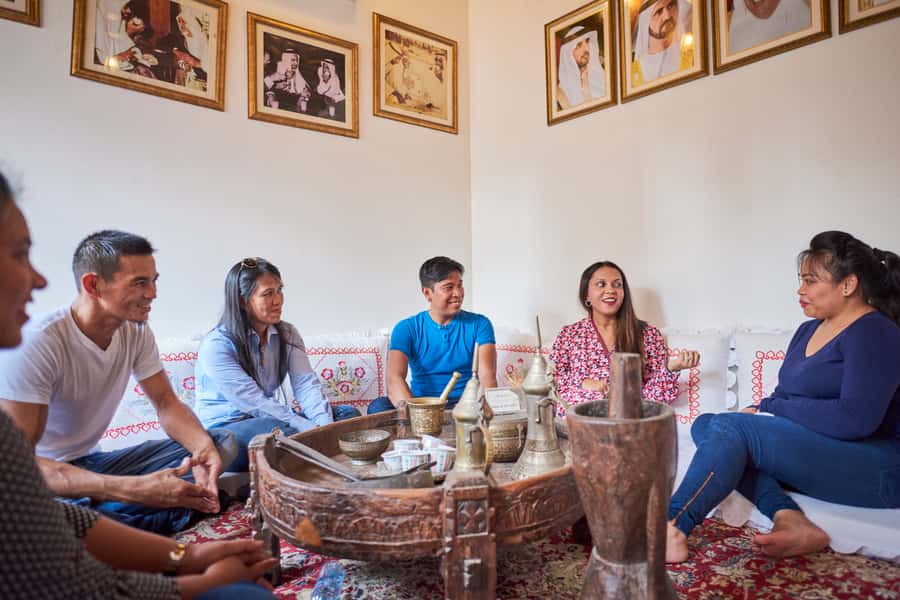
At $98 per person, this is not the cheapest way to walk through Old Dubai. You are paying for a private guide, heritage-house entrances, the abra ride, spice tastings, a souvenir gift, and a planned route through several areas. There is no pickup or drop-off, and food beyond the listed tastings is not included.
I think the value is strongest for a small private group that wants a focused introduction without arranging each stop independently. A guide gives you historical context, helps you read the markets, and handles the route between Al Fahidi and Deira. That can be worth the cost if this is your first visit or if you have only a short time in the city.
For one person, the price may feel high for two hours. For a family or private group, the cost buys flexibility and personal attention. It is also a useful first-day activity, as Andrea described it, because it helps you get your bearings and gives you practical ideas for later shopping and sightseeing.
The experience provider, Dubai by Foot, says its guides have won Dubai Culture Authority Tour Guides of the Year Awards for three consecutive years. That claim helps explain the emphasis on storytelling and local knowledge, though the quality of your exact tour will still depend on the guide assigned to your booking.
Families, Language, Pace, and Comfort
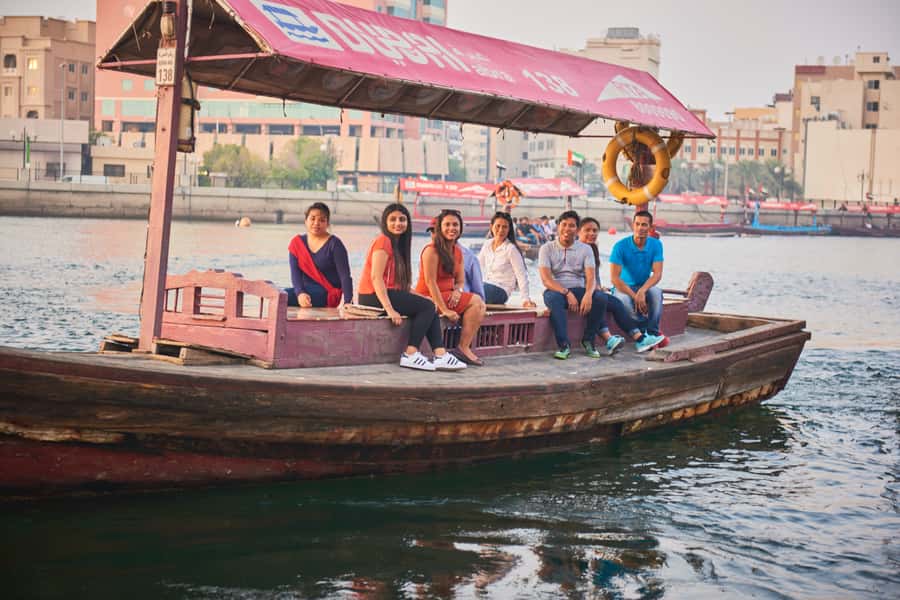
This tour works particularly well for families. Pri was praised for keeping a 10-year-old, a teenager, and younger children interested, while other guides adjusted their speech for a six-year-old or spoke slowly for visitors who were less comfortable in English.
The official languages are English and Hindi. If your English is limited, tell the operator in advance or speak with your guide at the start. One guide was specifically praised for slowing down and making the tour easy to follow.
The private setup also helps with pace. You can ask questions, pause for photographs, and focus on culture, architecture, shopping, or food depending on your interests. The short duration limits how much flexibility is possible, but it still feels more personal than a large group walk.
You should be comfortable walking through historic lanes and market areas. The tour is not suitable for wheelchair users, and the combination of uneven historic streets, outdoor heat, and crowded souks may be tiring for anyone with mobility concerns. There is no hotel pickup or drop-off, so plan your transport to Al Fahidi and from the Gold Souk.
Who Should Book This Old Dubai Walk?
I would recommend this tour if you want to understand Dubai beyond its modern attractions. It is especially useful for first-time visitors, families, couples who prefer a private guide, and anyone interested in architecture, local customs, trade, and shopping.
It also suits people who want practical market help. Guides have helped with bargaining, suggested places to compare prices, and explained how to approach the spice and gold souks. That advice can make the markets less intimidating.
I would be more cautious if your main goal is extended shopping. Fifteen minutes in a market section is enough for an introduction, not for a leisurely search through every stall. You may also find the $98 price hard to justify if you are happy to walk through Old Dubai independently and skip the historical explanations.
Should You Book It?
Book this tour if you want a short, personal introduction to the city’s older side, with a traditional boat crossing and guided market visits built in. The strongest reasons are the private format, the well-regarded guides, the link between Dubai’s early trading life and its modern success, and the practical help in the souks.
Skip it if you want a long museum visit, a relaxed shopping day, hotel transport, or a wheelchair-friendly route. For most first visits, though, this is a smart way to spend two hours. Start in Al Fahidi, listen closely, enjoy the abra crossing, and treat the souks as places to learn as much as places to buy.
FAQ
Where does the Dubai Old Town walking tour begin?
It begins outside Arabian Tea House Restaurant and Cafe in Bastakiya, within the Al Fahidi Historical Neighborhood.
Where does the tour finish?
The tour finishes in the Gold Souk neighborhood on the Deira side of Dubai.
Is the abra ride included?
Yes. The traditional abra ride across Dubai Creek is included in the tour price.
What is included in the $98 price?
The price includes a guide, heritage-house and museum entrances, the abra ride, tastings at the Spice Souk, and a souvenir gift.
Is hotel pickup and drop-off included?
No. Pickup and drop-off are not included, so you need to make your own way to the meeting point and arrange transport after the tour.
Is the tour available in English?
Yes. Live guiding is available in English and Hindi.
Just added around Dubai
- Abu Dhabi and Ferrari World Tour★ 3.5 · 9 reviews
- Premium Desert safari With Dune buggy camel ride BBQ dinner★ 5.0 · 36 reviews
- Night City Tour of Dubai★ 4.5 · 14 reviews
- FLYBOARD 30mn session @ POPEYE JETSKI★ 5.0 · 80 reviews
- Full Day Hatta Mountain Tour from Dubai★ 5.0 · 23 reviews
- Sky Views Dubai with Options★ 4.5 · 17 reviews
- Dunes Safari Sandboarding and Photography in Desert★ 5.0 · 47 reviews
- Dubai Sunrise / Morning private safari tour★ 5.0 · 18 reviews
Historical Tours, compared.
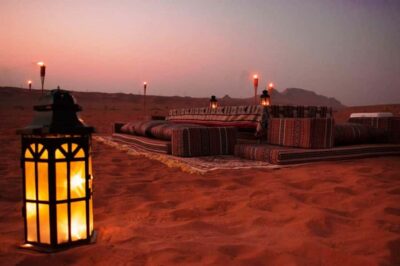
Dubai Evening Heritage Safari by Vintage G Class Al Marmoom Oasis
Read our review →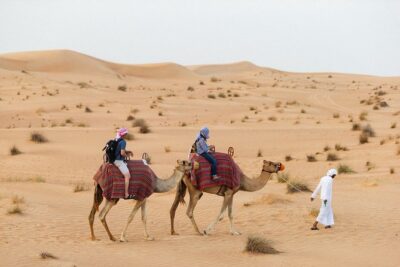
Dubai Camel Desert Safari, Traditional Meal & Heritage Activities
Read our review →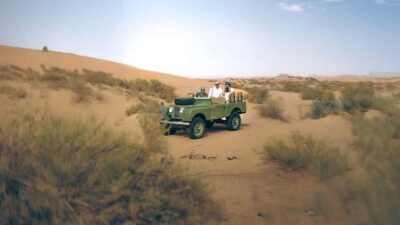
Heritage Safari in Vintage Land Rover with Dinner
Read our review →
Abu Dhabi Trip with Lunch at Al Khayma Heritage Restaurant
Read our review →
Heritage Safari, Camel Ride & Al Marmoom Oasis Dinner
Read our review →
Also listed under