
Reviewed · OLD DUBAI AND THE SOUKS
Dubai Old Town Walking Tour with Abra ride, Spice and Gold Souk
Old Dubai rewards slow walking. This private tour links Al Fahidi Historical Neighbourhood, the creek, and Dubai’s famous souks in a compact two to three hours. I like the traditional abra crossing and the chance to see Dubai through its older streets, not only its modern towers. I also like that a licensed local guide handles the route and explains the customs, markets, and religious sites along the way.
The main catch is the price: $86.53 per person is fair for a private tour with a guide, snacks, drinks, and an abra ride, but it is not the cheapest way to visit the souks. The short duration also means the tour gives you an introduction rather than plenty of unhurried shopping time.
In This Review
- Key points to know before booking
- Why this short tour works in modern Dubai
- Starting among the wind towers of Al Fahidi
- Al Fahidi Fort and Dubai’s early political center
- A brief visit to Dubai’s Hindu temple
- Textile Souk: color, bargaining, and shopping pressure
- Crossing Dubai Creek by traditional abra
- Spice Souk: follow the aromas through Deira
- Gold Souk: a bright finish in Deira
- What the $86.53 price really buys you
- Timing, comfort, and practical planning
- Who will get the most from this Old Dubai route?
- My verdict: book it for context, not just transport
- FAQ
- How long does the Dubai Old Town Walking Tour last?
- Where does the tour begin?
- Where does the tour end?
- Is the abra ride included?
- Is this a private tour?
- What food and drinks are included?
- Which souks does the tour visit?
- Is the tour suitable for most people?
- Can I cancel for a full refund?
Key points to know before booking
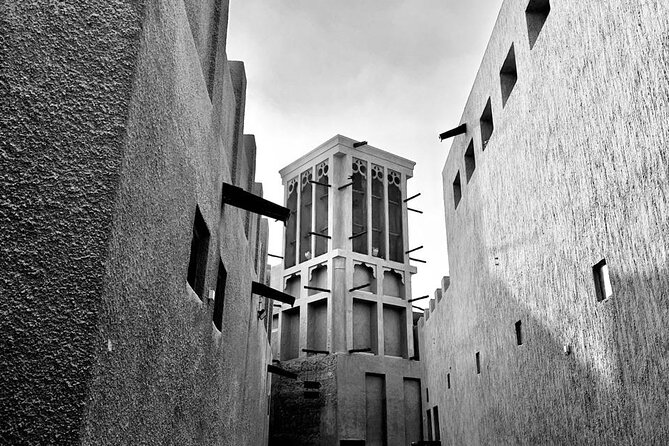
- Al Fahidi’s wind towers and lanes offer a clear look at traditional Dubai architecture.
- The abra crossing is simple, inexpensive, and one of the most authentic parts of the outing.
- Textile, Spice, and Gold Souks give you three very different market experiences in one route.
- Private touring means your group can ask questions and, based on past experiences, may be able to adjust the starting time.
- Guides such as Tamur, Mansoor Ali, Sarfaraz, and Ali Kumail have been praised for clear explanations, friendly help, and local advice.
- Bargaining matters in the textile and spice markets, and a guide can help you approach shopping with more confidence.
Why this short tour works in modern Dubai
Dubai is famous for glass towers, huge malls, and engineered attractions. Those are easy to find. The older city requires more attention, since its appeal is found in narrow lanes, modest buildings, market smells, and the movement of people across Dubai Creek.
This experience gives you a useful first look at that side of Dubai. You begin in Bur Dubai, walk through old quarters, visit a Hindu temple and the Textile Souk, then cross the creek to Deira for spices and gold. The route has a sensible shape, and the ending at the Gold Souk leaves you near a metro station or taxi stop for your next plan.
I especially like the private format. You are not tied to a large group, so you can ask about customs, architecture, shopping, or daily life as the questions occur to you. Several guides named in the feedback, including Tamur and Sarfaraz, were praised for explaining local culture, sharing stories, taking photographs, and helping with city navigation.
The timing may also be flexible. One past booking began at 5 p.m., which allowed the group to walk in cooler conditions before dinner. That is a useful option in Dubai, where heat can change the feel of a walking tour. Confirm the start time when you book, since the listed experience lasts only about two to three hours.
More creek and souk walks in Dubai:
- Dubai: Old Town, Creek, Museums, Souks, & Street Food Tour
★ 4.8 · 10,816 reviews - Dubai: Old Town, Souks, Street Food, Guided Tour & Abra Ride
★ 4.9 · 7,170 reviews - Dubai: Frame Tickets, Creek, Souks & Blue Mosque Guided Tour
★ 4.8 · 5,980 reviews
Starting among the wind towers of Al Fahidi
The tour begins at Local House Restaurant on Al Fahidi Street. From there, you enter Al Fahidi Historical Neighbourhood, the most atmospheric part of the route.
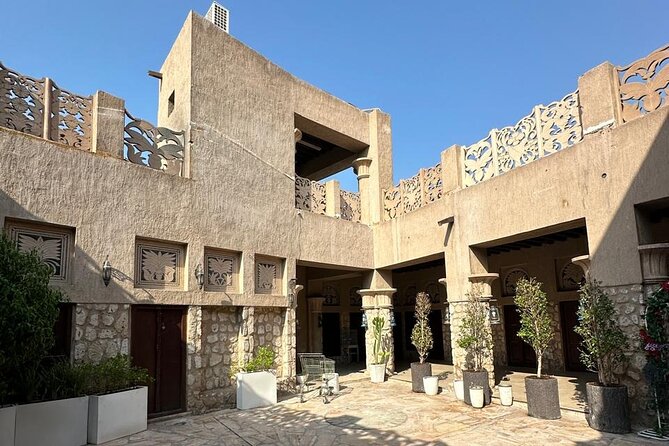
The quarter preserves a traditional style of Dubai life from the mid-19th century through the 1970s. Its buildings use materials such as stone, gypsum, teak, sandalwood, palm wood, and palm fronds. The most recognizable feature is the barjeel, or wind tower, designed to help move air through a building before modern cooling systems.
I find this stop valuable because it corrects the usual picture of Dubai. The city did not begin with skyscrapers. It grew from small neighborhoods, creek trade, fishing, and homes built for the climate. The lanes and public squares make that story easier to understand than a museum label alone.
You have about 20 minutes here, with admission included. That is enough for an introduction and some photographs, but not enough for a slow look at every courtyard or cultural display. Keep your expectations in check: this is a guided orientation, not a full afternoon devoted to the district.
The narrow paths can also feel less direct than Dubai’s modern streets. That is part of the charm, but it makes a guide useful. A good guide can point out details you might otherwise pass without noticing, especially the wind towers and traditional building materials.
Al Fahidi Fort and Dubai’s early political center
The route also includes Dubai’s oldest building, dating from the 1780s. Built as a fortress, Al Fahidi Fort later served as a center of political life in the old city.
The stop is important for context. The nearby lanes show domestic and commercial life, while the fort represents authority and defense. Together, they help you see how a small creek settlement organized itself before the era of oil wealth and rapid expansion.
The supplied schedule does not give this stop its own time allocation, so your exact viewing time may depend on the guide and the pace of your group. Ask questions here if you want more background, since the value of the fort comes from the explanation as much as from the exterior.
A brief visit to Dubai’s Hindu temple
The Shiva Temple provides a different perspective on old Bur Dubai. The Hindu temple serves the large Hindu community in the United Arab Emirates, and the complex was first established in 1958. It includes the Shiva Mandir, Krishna Mandir, and a Gurudwara.
You have about 10 minutes, with admission included. This is a short cultural stop, not a long religious tour. The main value is seeing how several communities have shaped the older part of Dubai and how places of worship sit within a district also known for trade and historic buildings.
Treat the temple as a place of worship. Your guide can help you understand the setting and explain what you are seeing. Since the visit is brief, do not expect a detailed tour of every part of the complex.
More Walking Tours in Dubai:
- Dubai: Private Old Town, Heritage & Souks Walking Tour
★ 4.9 · 102 reviews - Dubai: Old City Walking Tour with Abra Ride
★ 5.0 · 101 reviews - Dubai: Old Town Walking Tour with Abra Cruise & Street Food
★ 4.9 · 71 reviews - Dubai: Walking, Architecture and History Tour of Dubai Opera
★ 4.9 · 40 reviews
Textile Souk: color, bargaining, and shopping pressure
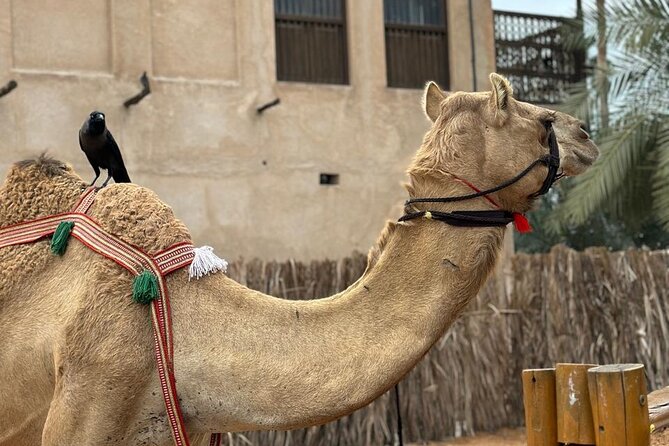
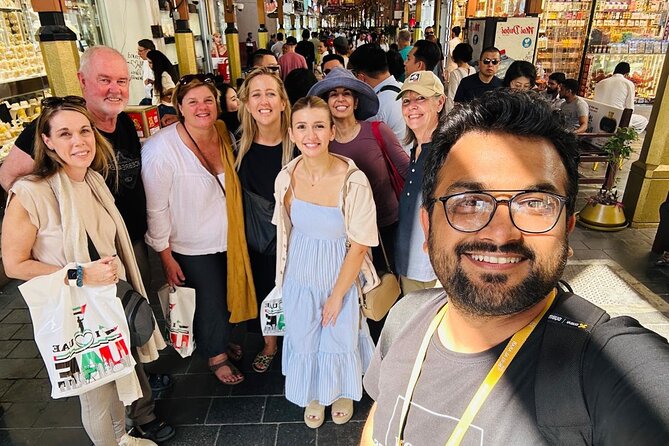
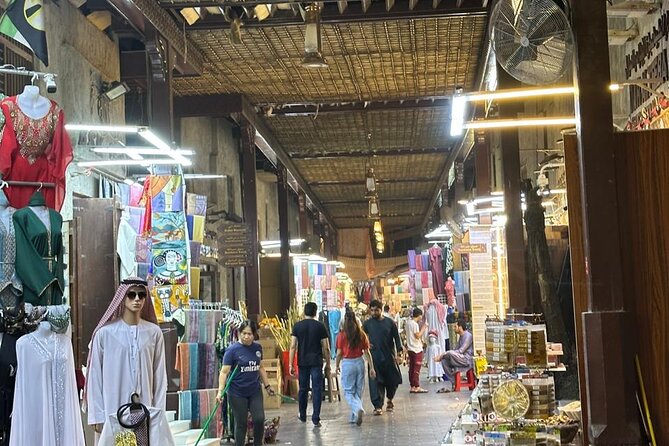
The Textile Souk is the first proper market stop. It is known for fabrics, shawls, embroidery, and textiles from different parts of the world. You have about 20 minutes to look around and shop.
This is a good place to practice bargaining. Prices are not always fixed, and the advice is direct: negotiate politely. If you are buying a textile item or souvenir, take your time before agreeing to a price. A guide can make this more comfortable, especially if you are unsure how the market works.
The short stop creates a tradeoff. You can get a feel for the colors, textures, and sales pitches, but serious shopping may require returning later. The tour ends at the Gold Souk, so you can revisit the Textile Souk only if your schedule allows it.
I would treat this stop as an introduction rather than a shopping mission. Look first, compare prices, and do not let the pace push you into a purchase. The guide’s presence can help you ask questions, but you remain responsible for deciding what to buy.
Crossing Dubai Creek by traditional abra
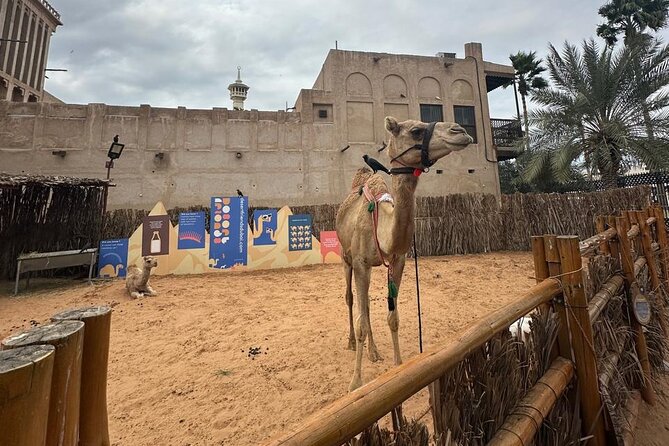
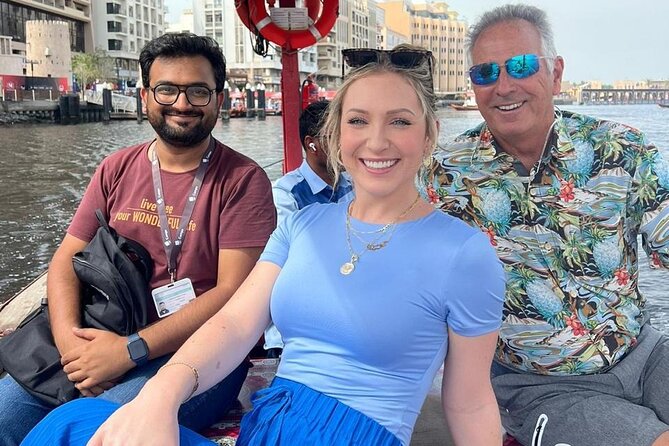
At Bur Dubai Abra Station, you board a traditional abra for the trip across Dubai Creek. The ride takes about 10 minutes and links Bur Dubai with Deira.
This is the simplest part of the tour, yet it may be the most memorable. The creek is not just scenery. It is the reason these two districts developed as trading centers, and crossing it by a small traditional boat gives you a direct connection to that older pattern of movement.
The ride is also practical. Instead of treating the creek as a barrier between separate attractions, the tour uses it as the route from one side to the other. You get a change of pace after walking through the lanes and markets.
The tour information also includes bottled water, coffee or tea, snacks, and a tasting opportunity involving dates, chocolates, dried fruits, nuts, and oil perfumes during the creek portion or nearby market visit. The exact order may vary, so ask your guide when these refreshments will be offered.
Spice Souk: follow the aromas through Deira
After crossing to Deira, you spend about 20 minutes at the Dubai Spice Souk. The market is known for its strong aromas and wide selection of spices, and it is described as Dubai’s oldest market.
This is the point where your senses take over. You can expect colorful displays and unfamiliar ingredients, with your guide explaining what different spices are used for. The stop becomes more useful when you ask questions instead of simply taking photographs.
Bargaining is again part of the experience. If you want to buy spices, ask about quantities, prices, and how to use the product before paying. The market can be an enjoyable place to shop, but the sales approach may feel more direct than what you are used to. A private guide gives you someone to consult while you decide.
The 20-minute limit is enough for a market introduction and perhaps a small purchase. It is not much time for comparing several shops. If spices are a priority for you, tell the guide early and avoid spending too long at the Textile Souk.
Gold Souk: a bright finish in Deira
The final stop is Dubai’s Gold Souk, one of the largest gold markets in the world. It has a large collection of jewelry shops and a wide range of designs. You have about 20 minutes here.
Even if you do not plan to buy jewelry, the Gold Souk is worth seeing for its scale and display windows. The experience is different from the Spice Souk: less about aroma and loose ingredients, more about craftsmanship, precious metals, and comparison shopping.
If you do plan to buy, use the guide as a sounding board. One past visitor specifically valued help getting a good price for jewelry. That does not mean the guide can guarantee a bargain, but local support can help you understand the buying process and avoid feeling rushed.
The ending is convenient. Your guide can point you toward the nearest metro station or taxi stop. That matters because the tour does not return to its starting point. Plan your next activity from Deira rather than assuming you will finish back in Bur Dubai.
What the $86.53 price really buys you
At $86.53 per person, this tour makes the most sense when you value private attention. The price includes a licensed local guide, the abra ride, bottled water, coffee or tea, snacks, and admission at the listed stops. It also saves you from piecing together transport between Bur Dubai and Deira.
For a solo visitor, the cost may feel high compared with simply walking through the neighborhoods and paying for an abra ride independently. For a couple, family, or small group, the private format can make the price easier to justify, especially when you want explanations and help with navigation.
The tour is booked an average of 57 days ahead, which suggests you should not leave it until the last minute if the date matters to you. Group discounts are available, though the exact savings are not provided.
I would judge the price by your priorities. If you want a guide who can answer questions, explain cultural details, assist with shopping, and adjust the conversation to your interests, the cost is reasonable. If you mainly want photographs and market browsing, a self-guided visit will likely offer better value.
Timing, comfort, and practical planning
The experience lasts approximately two to three hours. The scheduled stops add up to about 100 minutes, with the remaining time used for walking, explanations, shopping, and the creek crossing.
A later start can help with the heat. One booking began at 5 p.m., allowing the group to walk before dinner. Ask about timing rather than assuming every booking will begin at that hour.
Wear comfortable shoes and carry water, even though bottled water is included. You will walk through lanes, souks, and transport areas, and the surfaces may not feel as easy as a modern shopping mall.
Dress respectfully for the temple and other cultural sites. Keep the tour’s pace in mind, too. You can ask for more time at a particular stop, but the route includes six main areas and ends at the Gold Souk.
The tour is near public transportation, and most people can participate. It is listed as suitable for everyone, but the walking format and short boat ride still mean you should consider your own comfort before booking.
Who will get the most from this Old Dubai route?
I would recommend this experience to first-time visitors who want a clear introduction to Dubai’s older districts. It works especially well early in a trip, since the guide can help you understand the city and offer practical advice for later sightseeing.
It also suits solo visitors. A private guide gives you room for conversation, and one solo booking found the cultural discussion particularly engaging. Couples and families may appreciate the private setting, the photographs, and the help moving between sites.
This is less suitable if you want a long shopping session. The Textile, Spice, and Gold Souks each receive about 20 minutes, so the route favors variety over detailed buying.
It is also not the right choice for someone focused only on modern Dubai. There are no skyscraper viewpoints or large attractions here. The appeal is the older city, local markets, religious sites, architecture, and the creek.
My verdict: book it for context, not just transport
I like this tour because it connects several parts of Old Dubai in one well-shaped route. Al Fahidi gives you traditional architecture, the temple adds cultural context, the Textile Souk introduces market shopping, and the abra ride carries you naturally to the Spice and Gold Souks.
The strongest part is the guide. Names including Tamur, Mansoor Ali, Sarfaraz, and Ali Kumail have been associated with friendly service, useful explanations, photographs, city-navigation help, and assistance with jewelry shopping. Your guide will determine much of the tour’s quality, so use the private format well by asking questions.
Book it if you want a guided introduction and value personal attention. Skip it if you prefer setting your own pace or plan to spend hours bargaining in one market. For a first look at the older side of Dubai, the route offers a practical mix of walking, culture, shopping, and one memorable creek crossing.
FAQ
How long does the Dubai Old Town Walking Tour last?
The experience lasts approximately two to three hours.
Where does the tour begin?
It begins at Local House Restaurant, 65 Al Fahidi Street, Bur Dubai, Al Fahidi, Dubai.
Where does the tour end?
The tour ends at the Dubai Gold Souk in Deira. The guide can assist you with directions to the nearest metro station or taxi stop.
Is the abra ride included?
Yes. The traditional abra ride across Dubai Creek is included.
Is this a private tour?
Yes. Only your group participates in the private activity.
What food and drinks are included?
The tour includes bottled water, coffee or tea, snacks, and a tasting opportunity involving dates, chocolates, dried fruits, nuts, and oil perfumes.
Which souks does the tour visit?
It visits the Textile Souk, Dubai Spice Souk, and Dubai Gold Souk.
Is the tour suitable for most people?
Yes. Most people can participate, and the experience is recommended to everyone. It is a walking tour with a short abra crossing.
Can I cancel for a full refund?
Yes, if you cancel at least 24 hours before the experience start time. Cancellations or changes made within 24 hours are not refunded or accepted.
Just added around Dubai
- Abu Dhabi and Ferrari World Tour★ 3.5 · 9 reviews
- Night City Tour of Dubai★ 4.5 · 14 reviews
- FLYBOARD 30mn session @ POPEYE JETSKI★ 5.0 · 80 reviews
- Premium Desert safari With Dune buggy camel ride BBQ dinner★ 5.0 · 36 reviews
- Full Day Hatta Mountain Tour from Dubai★ 5.0 · 23 reviews
- Sky Views Dubai with Options★ 4.5 · 17 reviews
- Dunes Safari Sandboarding and Photography in Desert★ 5.0 · 47 reviews
- Dubai Sunrise / Morning private safari tour★ 5.0 · 18 reviews
Old Dubai and the Souks, compared.
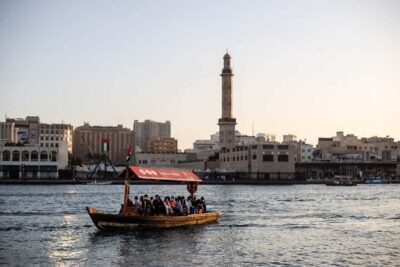
Old Town, Creek, Museums, Souks, & Street Food Tour
Read our review →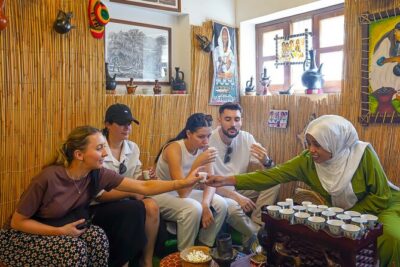
Old Town, Souks, Street Food, Guided Tour & Abra Ride
Read our review →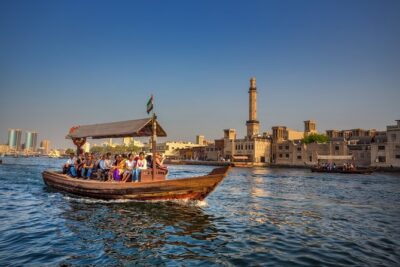
Frame Tickets, Creek, Souks & Blue Mosque Guided Tour
Read our review →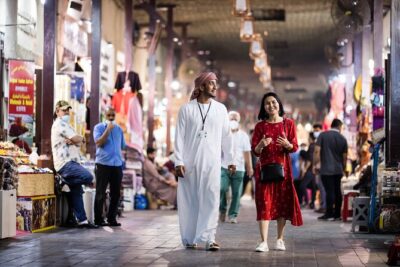
Dubai Aladdin Tour: Souks, Creek, Old Dubai and Tastings
Read our review →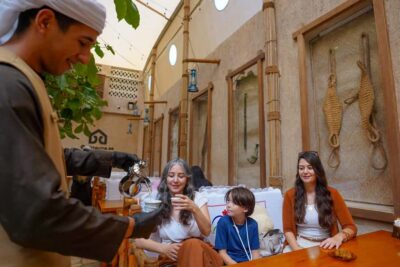
Half-Day City Tour with Blue Mosque, Creek, and Souks
Read our review →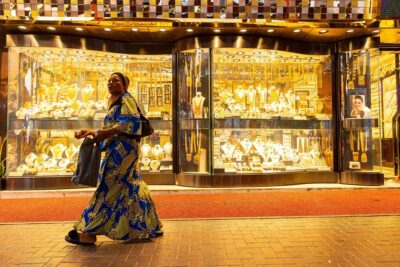
Dubai Half-Day City Tour with Visit to Dubai Gold Souk
Read our review →Old Town, Souks, Street Food, Guided Tour & Abra Ride
Read our review →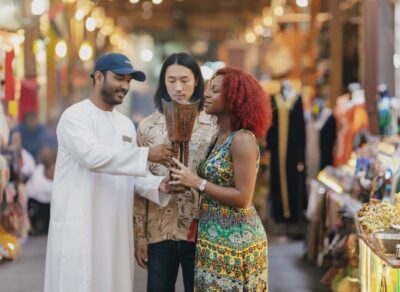
Old Town, Street Food, Creek, Souks, & Emirati House
Read our review →Also listed under