
Reviewed · OLD DUBAI AND THE SOUKS
Old Dubai Gold Souk and Water Taxi
Old Dubai still moves at water level. This four-hour outing links the city’s older quarters with a traditional abra crossing, the Spice Market, and the Gold Souk. I like the easy hotel or cruise-port pickup, and I like that the route gives you both cultural sights and time beside Dubai Creek for $45 per person.
I also like the visit to Al Fahidi Fort and the chance to see Bastakiya’s wind-tower houses before the shopping stops. The main drawback is time: several sights are packed into half a day, so the souks may leave you too little time to bargain or buy anything. Short photo stops at Jumeirah Mosque and Jumeirah Beach can also feel rushed.
In This Review
- Key points to know before booking
- Why this four-hour route works for a first look
- Bastakiya and Al Fahidi: the best part for context
- Al Fahidi Fort and Dubai Museum
- Crossing Dubai Creek by traditional abra
- Spice Market: use your senses, but watch the clock
- Gold Souk: glitter, sales pitches, and limited bargaining time
- Women’s Museum and the extra cultural stops
- Jumeirah Mosque, Burj Al Arab, and the limits of photo stops
- Pickup, group size, and how the morning may feel
- Is $45 a fair price?
- Who should book this Old Dubai tour?
- Should you book it?
- FAQ
- How long does the Old Dubai Gold Souk and Water Taxi tour last?
- Is hotel pickup included?
- Does the tour include the abra water taxi ride?
- Are entrance fees included?
- Do I need to bring a passport?
- Can I cancel for a full refund?
Key points to know before booking
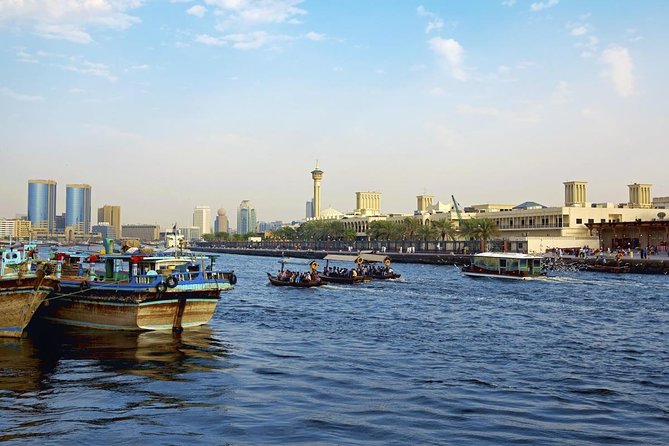
- The abra crossing is the tour’s most memorable ride: You cross Dubai Creek in a traditional wooden water taxi rather than a modern vehicle.
- Bastakiya and Al Fahidi Fort provide the historical core: The old merchant houses and Dubai Museum add context before the souks.
- The Gold Souk is for seeing, not just shopping: You can browse elaborate jewelry displays, but the schedule may not allow extended bargaining.
- Pickup makes the $45 price easier to justify: Hotel and cruise-port transportation are included, along with a driver-guide and entrance fees.
- The route includes several brief add-ons: Expect the Women’s Museum, a private fashion show, Jumeirah Mosque photos, and a drive past Burj Al Arab.
- The group can reach 25 people: That keeps the cost modest, though a larger group may make short stops feel even shorter.
Why this four-hour route works for a first look
Dubai is often presented through glass towers, indoor malls, and grand hotels. This tour takes you in another direction, toward the creek that shaped the older city and the neighborhoods built around trade.
For a first visit, that contrast matters. You see where merchants lived, how goods moved across the water, and how old markets still fit into a modern city. The route is not a slow walking tour with long conversations at each site. It is a compact introduction, useful if you have only one free morning or are visiting Dubai from a cruise ship.
The start time is 8:30 am. That gives you a useful block of sightseeing before the heat becomes a bigger concern. You will still walk through historic areas and markets, so wear comfortable shoes and bring a passport, which is required on the day of the tour.
The tour accepts a maximum of 25 people. That is not an intimate private excursion, but it is also not a huge coach operation. Your experience will depend partly on how efficiently the group moves between stops.
More creek and souk walks in Dubai:
- Dubai: Old Town, Creek, Museums, Souks, & Street Food Tour
★ 4.8 · 10,816 reviews - Dubai: Old Town, Souks, Street Food, Guided Tour & Abra Ride
★ 4.9 · 7,170 reviews - Dubai: Frame Tickets, Creek, Souks & Blue Mosque Guided Tour
★ 4.8 · 5,980 reviews
Bastakiya and Al Fahidi: the best part for context
The tour begins around Al Fahidi Historical Neighbourhood, also known as Bastakiya. This is where Dubai’s older character comes into view. The district is known for its merchant houses, narrow lanes, art galleries, cafés, and small hotels.
The wind towers are the key detail to notice. These structures were built into the homes of wealthy merchants and helped move air through the buildings before modern cooling systems. They also show how closely old Dubai was tied to the climate and to trade.
I would pay attention here instead of treating the stop as a quick backdrop for photographs. The neighborhood gives you a better sense of Dubai before its oil wealth and skyscrapers changed the city’s scale.
The scheduled visit lasts about an hour and includes admission. That hour appears to cover the Bastakiya area, Al Fahidi Fort, and the Dubai Museum, so you should not expect a long, unhurried exploration of every lane.
Still, it is a good use of time. You get an introduction to the city’s older architecture, then move directly into its formal history.
Al Fahidi Fort and Dubai Museum
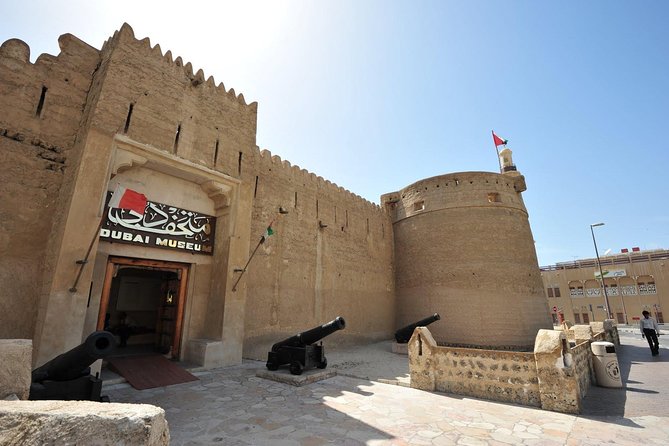
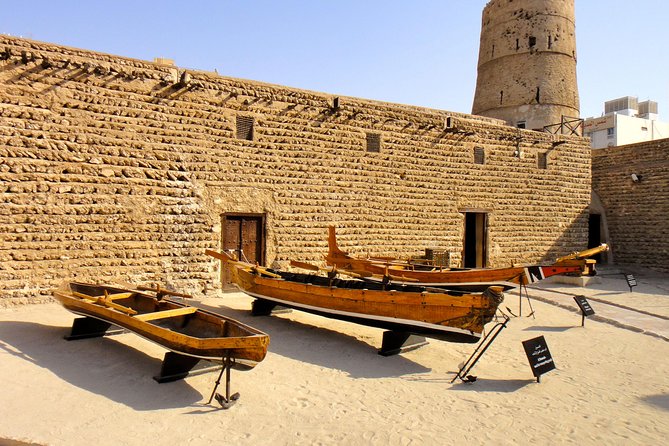
Al Fahidi Fort is described as the oldest existing building in Dubai. It now houses the Dubai Museum, where exhibits and city archives trace Dubai’s development.
This stop adds value because the souks can otherwise seem like isolated shopping streets. The museum helps connect the dots between the creek, merchant homes, trade, and the city’s later growth.
The museum is not presented as a full-day museum visit. Think of it as a compact orientation. You will see exhibits about Dubai’s past, then move on while the information is still fresh.
For me, this is one of the strongest reasons to choose the organized tour instead of simply taking a taxi to the Gold Souk. A taxi can get you there quickly, but it does not automatically provide this sequence or explain why the creek and old neighborhoods matter.
The drawback is the same one found throughout the route: the schedule is tight. If you prefer to read every display or study each building, four hours will feel short.
Crossing Dubai Creek by traditional abra
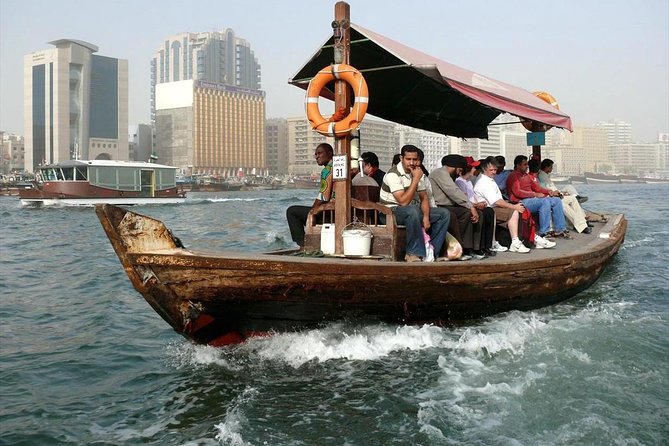
The water taxi ride is the tour’s clearest change of pace. After walking through the historic quarter and visiting the fort, you board a traditional wooden abra to cross Dubai Creek.
This is a simple ride, not a luxury cruise. That is part of its appeal. You are using the sort of small water transport associated with everyday movement across the creek, not viewing the city from a polished sightseeing boat.
The crossing also helps you understand the layout of Old Dubai. The creek separates areas that developed around trade, markets, and transport. From the water, you get a different view of the waterfront and the older buildings along it.
The ride itself is brief, so do not expect a long cruise or a full narrated boat tour. Have your camera ready before boarding, and keep your belongings secure while moving on and off the abra.
This part is especially good for anyone who wants an experience rather than a chain of indoor stops. It is also one reason the tour feels more connected to the city than a standard drive between major attractions.
A few more Dubai trips worth comparing
- Dubai: Burj Khalifa Levels 124 & 125 Entry Ticket + Options
★ 4.3 · 90,891 reviews - Dubai: Desert Safari, Quad Bike, Camel Ride & Al Khayma Camp
★ 4.9 · 68,962 reviews - Dubai: Desert Safari, Quad Bike, Camel Ride and Sandboarding
★ 4.9 · 43,505 reviews - Dubai: Safari, Quad Bike, Camel Ride, and Buffet Dinner
★ 4.9 · 33,424 reviews
Spice Market: use your senses, but watch the clock
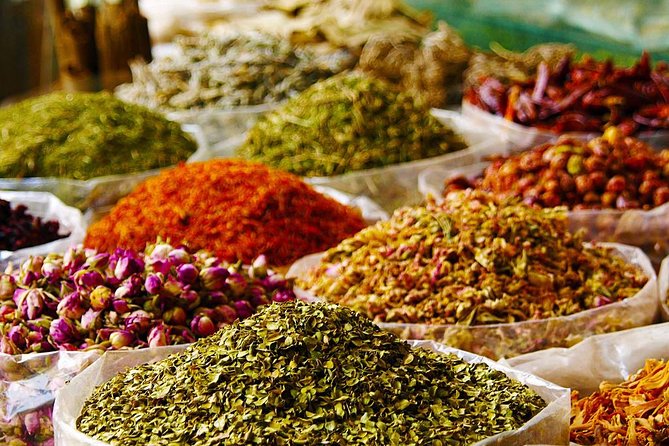
On the opposite side of the creek, the tour continues to the Spice Market. This is where the route shifts from architecture and museum exhibits to trade and shopping.
You can expect stalls centered on spices and related market goods. The appeal is not just what you might purchase. The market shows how Dubai’s older commercial life worked, with small shops gathered close to the water and linked to regional trade.
You will have time to browse, but the tour schedule may not leave much room for careful comparison. If you want to buy spices, ask about prices and quantities before committing. A guided market visit can make it easier to get oriented, but you should still decide for yourself what you want and what price feels fair.
The tour’s shopping element is best for looking, tasting the atmosphere, and learning how the market works. It is less suited to someone who wants to spend an hour at one shop bargaining over several purchases.
Some versions of this type of route may also include an art-gallery visit. That can be interesting if you enjoy browsing local work, but it can feel like an unexpected sales stop if your priority is the souks. Keep that possibility in mind when deciding how much shopping time you need.
Gold Souk: glitter, sales pitches, and limited bargaining time
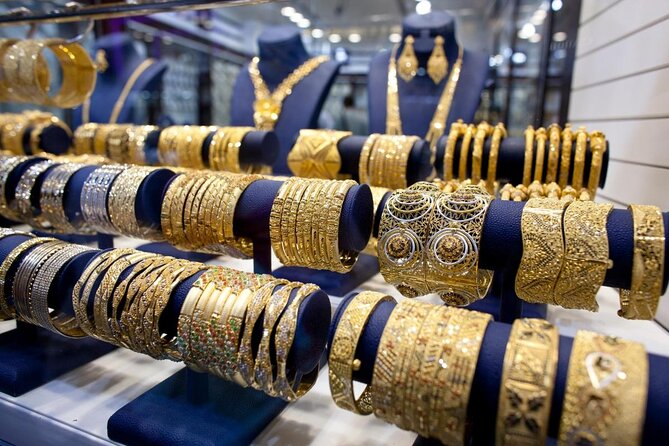
The Gold Souk is the most famous shopping stop on the route. Shop windows display necklaces, bracelets, rings, and large decorative pieces, often with far more gold on show than you might see in an ordinary jewelry district.
Even if you do not plan to buy anything, it is worth seeing the scale and presentation. The Gold Souk is part market, part spectacle. It gives you a direct look at Dubai’s reputation for luxury commerce without requiring a visit to a high-end mall.
If you do plan to purchase jewelry, arrive with a clear idea of what you want. Compare shops, ask about the gold purity, and separate the cost of the gold from the workmanship. The guide may help you find your way around, but you should never feel pressured to buy.
The main issue is time. A half-day tour has to keep moving, and you may not have enough time to bargain properly or complete a thoughtful purchase. I would treat this stop as a first look. Return independently later if you want a serious shopping session.
That flexibility is important. The tour gives you transportation and orientation, while a later self-guided visit lets you set the pace.
Women’s Museum and the extra cultural stops
The route also includes the Women’s Museum. This adds a social and cultural angle that is different from the fort, markets, and jewelry displays.
The supplied details do not specify how long you spend inside, so expect the timing to depend on the group and the day’s traffic. The museum is included in the overall route, but it is one of several stops competing for the same four-hour window.
A private fashion show is also part of the experience. This may appeal to you if you enjoy clothing, design, and presentations connected with local culture. If fashion is not a priority, it may feel less essential than the old neighborhood and creek crossing.
These stops make the outing broader than a basic Gold Souk trip. They also make it harder to predict exactly how much time you will have at each location. If your main goal is history, focus on Bastakiya and the museum. If you want a mix of shopping, local culture, and city sightseeing, the varied program is a benefit.
Jumeirah Mosque, Burj Al Arab, and the limits of photo stops
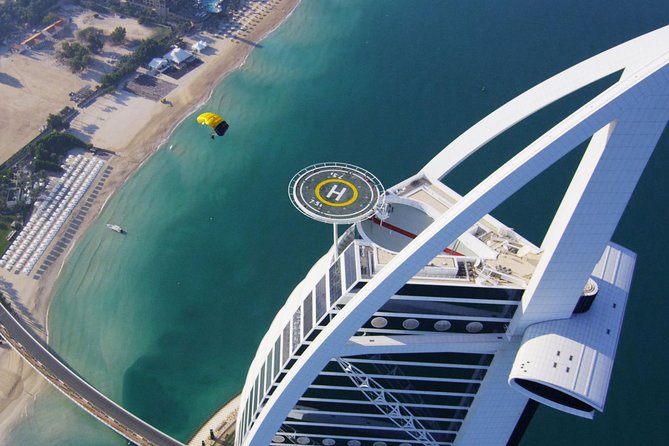
The tour includes a visit to Jumeirah Mosque and a drive past the Burj Al Arab. The mosque stop is described as a chance to take pictures, not as an extended interior visit.
That distinction matters. You may be dropped off by the roadside for roughly ten minutes, giving you time for photographs but not a long look around. The stop can still be worthwhile as a quick way to see one of Dubai’s best-known religious buildings, but it should not be confused with a detailed mosque tour.
The drive past Burj Al Arab works in the same way. You see one of the city’s most recognizable luxury hotels from outside, adding a modern Dubai landmark to a day otherwise focused on older districts.
Jumeirah Beach may also appear as a short photo stop. Again, keep expectations in check. This is not beach time, swimming time, or a leisurely coastal walk. It is a quick look and a photograph before the vehicle continues.
I like the contrast between the old creek districts and these modern symbols. The problem is that every extra sight uses minutes that could otherwise go to the Gold Souk or museum.
Pickup, group size, and how the morning may feel
Hotel and cruise-port pickup and drop-off are included. That is a practical advantage in Dubai, particularly if you are unfamiliar with the city or only have a short port stay.
The tour begins at 8:30 am, but confirm the pickup time and location before the morning of the excursion. Communication about transportation has not always been clear, and one account describes a wait of about 40 minutes in the vehicle while another person was collected.
That sort of delay matters on a four-hour tour. It can reduce time at the souks and make the day feel more like a transfer service than a sightseeing program. Call to confirm the details if the operator has not clearly provided them.
The driver-guide is included. The strongest praise for the experience focuses on guides who were attentive, respectful, clear about the stops, and helpful to solo women. That is important in a city where you may be moving through unfamiliar markets and dealing with persistent sales offers.
Guide quality can vary, but a good guide adds real value here. The best version of this tour keeps the group moving, explains what you are seeing, and gives you room to make your own shopping decisions.
Is $45 a fair price?
At $45 per person, the tour is reasonably priced if you want convenience and a broad first look at Old Dubai. The package includes hotel or port pickup and drop-off, a driver-guide, entrance fees, and the abra crossing.
A comparable self-guided outing could cost less if you already know Dubai’s transport system and are happy to arrange each ride yourself. You could also spend much longer at the Gold Souk and Spice Market by skipping the added museums and photo stops.
The organized tour earns its price through convenience. You do not need to plan the order of Bastakiya, Al Fahidi Fort, the creek crossing, and the souks. You also avoid the problem of fitting several distant areas into one morning.
For a cruise passenger, the value is stronger. Pickup from the port and a fixed half-day schedule can make the difference between seeing Old Dubai and staying near the ship.
For a hotel guest with several free days, I would compare this with doing the old neighborhoods independently. The tour is a good orientation, but it is not the best choice if your only goal is unhurried shopping.
Who should book this Old Dubai tour?
I would recommend it most to:
- First-time visitors who want historical Dubai before visiting the modern districts
- Cruise passengers with limited time ashore
- People who prefer arranged transport and a guide
- Solo women who want the reassurance of a planned route and guide support
- Visitors who want a mixture of neighborhoods, museums, markets, and landmark photos
- Anyone who wants to ride an abra without having to plan the crossing
I would think twice if you want a long museum visit, extensive bargaining time, or a relaxed morning at one market. The tour covers a lot, but it does so at a brisk pace.
Wear smart-casual clothing, use comfortable walking shoes, and carry your current passport. Food and drinks are not included, so plan accordingly. A minimum of two people is required per booking, and the activity is intended for people with a moderate level of physical fitness.
Should you book it?
Book this tour if you want a convenient introduction to Dubai’s older side, especially from a cruise ship or during a short stay. The combination of Bastakiya, Al Fahidi Fort, Dubai Museum, the abra crossing, Spice Market, and Gold Souk gives you a useful picture of how the city grew around trade.
Skip it if you already know Old Dubai or want to shop at your own pace. The biggest tradeoff is breadth over depth. You will see many places, but the brief mosque and beach stops, possible gallery visit, vehicle wait, and limited souk time can leave you wishing for a slower schedule.
At $45, it is a sensible orientation tour rather than a deep cultural study. Go with realistic expectations, confirm pickup details, and treat the Gold Souk as a preview for a later independent visit if you find something you want to buy.
FAQ
How long does the Old Dubai Gold Souk and Water Taxi tour last?
The tour lasts approximately four hours and starts at 8:30 am.
Is hotel pickup included?
Yes. Hotel pickup and drop-off are included. Pickup and drop-off at the cruise port are also offered.
Does the tour include the abra water taxi ride?
Yes. The route includes a traditional wooden abra crossing of Dubai Creek to reach the Spice Market and Gold Souk.
Are entrance fees included?
Yes. Entrance fees are included in the tour price.
Do I need to bring a passport?
Yes. A current valid passport is required on the day of the tour.
Can I cancel for a full refund?
Yes, if you cancel at least 24 hours before the experience start time. Cancellations made within 24 hours are not refunded, and changes within that period are not accepted.
Just added around Dubai
- Abu Dhabi and Ferrari World Tour★ 3.5 · 9 reviews
- Premium Desert safari With Dune buggy camel ride BBQ dinner★ 5.0 · 36 reviews
- Night City Tour of Dubai★ 4.5 · 14 reviews
- FLYBOARD 30mn session @ POPEYE JETSKI★ 5.0 · 80 reviews
- Sky Views Dubai with Options★ 4.5 · 17 reviews
- Full Day Hatta Mountain Tour from Dubai★ 5.0 · 23 reviews
- Dunes Safari Sandboarding and Photography in Desert★ 5.0 · 47 reviews
- Dubai Sunrise / Morning private safari tour★ 5.0 · 18 reviews
Old Dubai and the Souks, compared.
Old Town, Creek, Museums, Souks, & Street Food Tour
Read our review →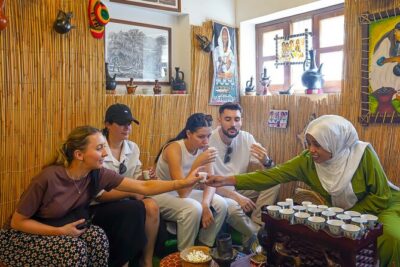
Old Town, Souks, Street Food, Guided Tour & Abra Ride
Read our review →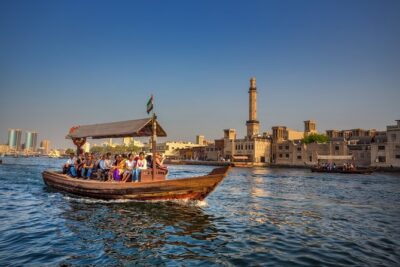
Frame Tickets, Creek, Souks & Blue Mosque Guided Tour
Read our review →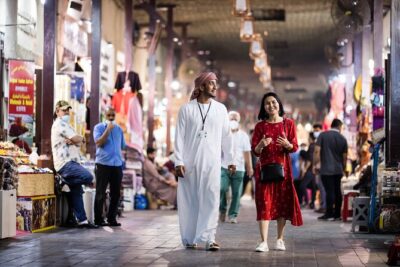
Dubai Aladdin Tour: Souks, Creek, Old Dubai and Tastings
Read our review →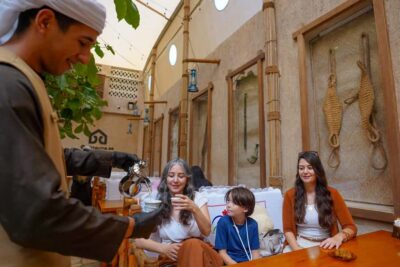
Half-Day City Tour with Blue Mosque, Creek, and Souks
Read our review →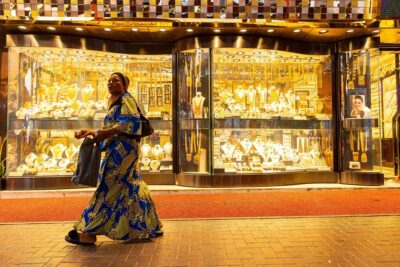
Dubai Half-Day City Tour with Visit to Dubai Gold Souk
Read our review →Old Town, Souks, Street Food, Guided Tour & Abra Ride
Read our review →
Old Town, Street Food, Creek, Souks, & Emirati House
Read our review →Also listed under