
Reviewed · MUSEUMS
Dubai Walking Tour “Fahidi Area, Dubai Museum, Souks”
Old Dubai tells a better story on foot. This small-group tour links Al Fahidi’s wind towers, an Arabic coffee tasting, Dubai Museum, the Textile Market, an abra ride, and the Spice and Gold Souks in one easy route. I especially like the local guide commentary and the simple boat crossing, which turns a string of sights into a connected look at Dubai’s trading past. The $25 price is also appealing because it includes the guide, coffee tasting, dates, and water.
The main caution is timing. The supplied schedule lists a two-day duration, but nearly all named stops appear on Day 1, with a vague 10-minute Day 2 entry. I would confirm the exact schedule before booking. You should also expect a warm, mostly outdoor walk, some shopping pressure in the souks, and limited time at each stop.
In This Review
- Key points at a glance
- Starting at Arabian Tea House in Al Fahidi
- Al Fahidi: Dubai before the towers
- Coffee Museum and the small pleasures of a short stop
- Dubai Museum and Al Fahidi Fort
- Walking through the Textile Market to Dubai Creek
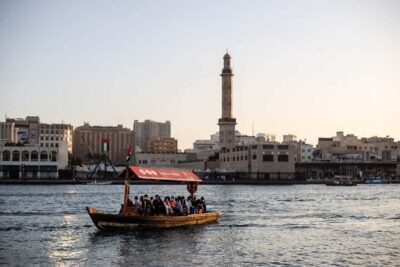
- The abra crossing: ten minutes on Dubai Creek
- Spice Souk: scents, dates, and narrow lanes
- Gold Souk: a dramatic final stop
- What the $25 price really gives you
- Guide quality and the human side of the tour
- Who should book this Old Dubai walk?
- Should you book this Dubai walking tour?
- FAQ
- Where does the Dubai walking tour begin?
- What time does the tour start?
- Where does the tour finish?
- How long does the experience last?
- Is the tour conducted in a large group?
- Is the abra ride included?
- Is food or drink included?
- Does the tour visit Dubai Museum?
- Can I stay in the souks after the tour?
- How can I reach the metro after the tour?
- Can I cancel for a full refund?
Key points at a glance
- Al Fahidi begins with old homes, galleries, and wind-tower architecture, giving you a clear picture of life before Dubai’s skyscrapers.
- Arabic coffee and Emirati dates add a real taste of local culture, not just a photo stop.
- The abra ride across Dubai Creek is included, offering a short but memorable link between Bur Dubai and Deira.
- The group is limited to eight people, so you should have a better chance to hear the guide and ask questions.
- The route ends at the Gold Souk, with the option to remain in the Spice or Gold Souk or walk to Ras Metro Station.
- Guides receive especially strong praise for warmth, patience, and cultural explanation, with Mahmoud, Alex, Mohammad, and Pri named in the supplied comments.
Starting at Arabian Tea House in Al Fahidi
The meeting point is Arabian Tea House Restaurant & Cafe in Al Fahidi, opposite the Musalla Post Office on Al Fahidi Street. The tour begins at 9:00 am, a sensible hour for a walking route in Dubai, when you can cover more ground before the heat becomes difficult.
The meeting location sits in the Al Fahidi area, close to the old quarter’s narrow lanes and restored houses. You should arrive with your phone ticket ready and allow time to locate the cafe and guide. The tour is capped at eight people, a useful size for a historic district where large groups can block passages and make conversation awkward.
A bottle of water is included. That is welcome, but you should still dress for a warm outdoor walk and bring anything else you normally need for several hours outside. The information does not list hotel pickup, meals, or transportation to the starting point, so you are responsible for reaching Al Fahidi.
More Museums in Dubai:
- Dubai: Museum of the Future Admission Ticket
★ 4.3 · 21,464 reviews - Dubai: Old Town, Creek, Museums, Souks, & Street Food Tour
★ 4.8 · 10,816 reviews - From Dubai: Abu Dhabi Grand Mosque & Louvre Museum Full-Day
★ 4.8 · 6,227 reviews
Al Fahidi: Dubai before the towers
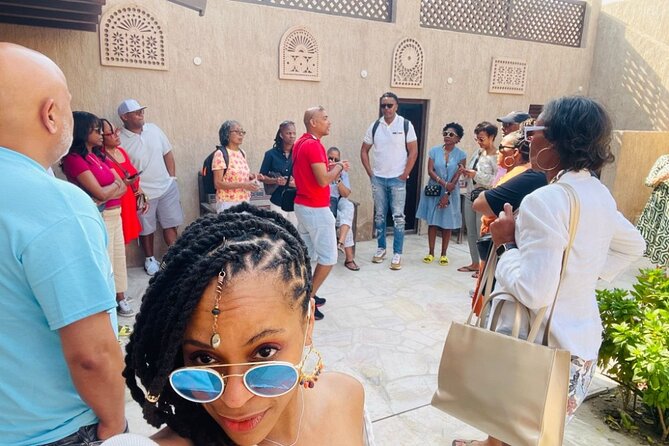
The first proper stop is Al Fahidi Historical Neighbourhood, also known as Bastakia in the tour description. You spend about 30 minutes walking through one of Dubai’s most important old districts, entering selected houses and seeing buildings that have been adapted into galleries or museums.
This is where the tour earns its keep. Al Fahidi helps you picture Dubai as a settlement shaped by homes, trade, family life, and practical building design, rather than as the polished modern city seen in most advertising. The guide explains how Emirati houses looked and how people lived before the city’s rapid growth.
Look closely at the inner architecture. The tour specifically includes visits inside some houses, so the stop is not limited to walking past doors and taking pictures. You get a chance to connect the outside forms with the way rooms and courtyards were arranged.
Thirty minutes is enough for an introduction, but not enough for every gallery or museum in the district. I would treat this as a guided orientation rather than a full architectural study. If a particular house catches your eye, make a note of it and return later on your own.
The guide matters most here. Mahmoud, also called Mahmoud Tourky or Alex in the supplied material, is repeatedly praised for explaining UAE culture with enthusiasm and care. Pri is also described as having lived in Dubai for 12 years and giving an informed account of Old Dubai. Guide assignment can vary, so you should not assume you will receive one particular person, but the comments point to a strong emphasis on personal explanation rather than scripted sightseeing.
Coffee Museum and the small pleasures of a short stop
The next stop is a coffee museum housed in the same area. The visit lasts about 10 minutes, and admission is listed as free.
The appealing part is the tasting. You are invited to sample Arabian coffee, choose a favorite, and learn a little about its place in local hospitality. The tour also includes Emirati dates later in the route, so these food moments help break up the architectural commentary.
Do not expect a long museum visit. Ten minutes gives you a taste, literally and figuratively, rather than time to study every display. Still, this is the kind of small stop I value on a walking tour because it links culture to an ordinary social custom.
The coffee tasting also gives you a pause before the next stretch. Use it to ask the guide about coffee traditions, the houses you have just seen, or anything you noticed in Al Fahidi. The guide’s willingness to answer questions is one of the most frequently praised parts of the experience.
Dubai Museum and Al Fahidi Fort
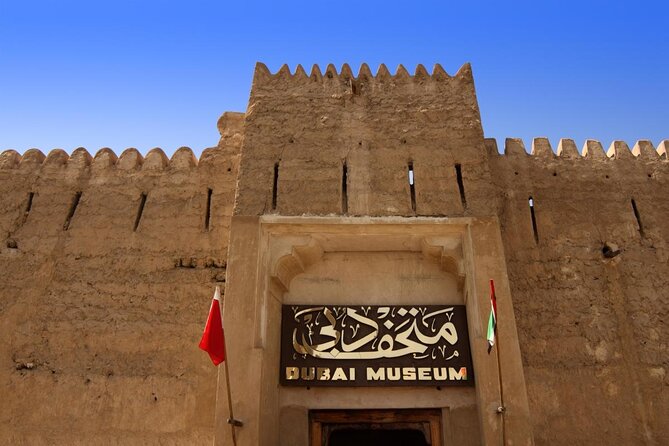
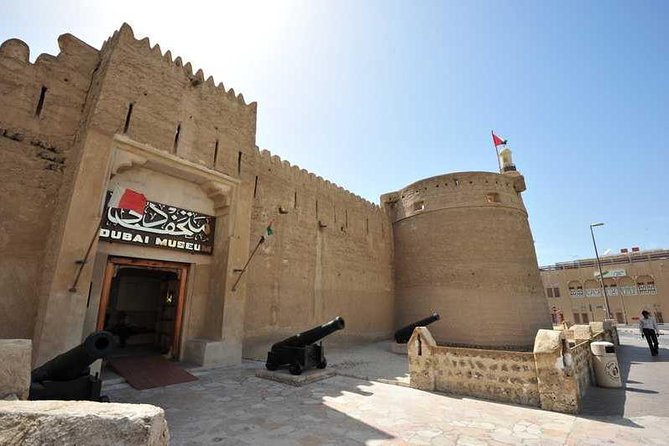
The tour then visits Dubai Museum and Al Fahidi Fort for about 30 minutes. The description says this stop covers the business of old Emiratis and the building style of forts. Admission is listed as free.
This section adds useful context to Al Fahidi. Instead of seeing old walls and houses as decorative remnants, you hear how the community functioned and why fortified buildings mattered. The museum and fort also give the guide a place to explain the older commercial life of Dubai before the city’s modern transformation.
The itinerary calls this a nice stop, but it does not promise a detailed museum visit or a specific number of exhibits. Thirty minutes is a compact amount of time. I would listen closely to the guide’s overview and avoid expecting an exhaustive visit.
There is also a practical point here: the supplied information lists the museum as part of the route and says admission is free, but it does not give current opening details or explain what happens if an area is unavailable. If this stop is central to your plans, confirm the day’s access before booking.
More Walking Tours in Dubai:
- Dubai: Private Old Town, Heritage & Souks Walking Tour
★ 4.9 · 102 reviews - Dubai: Old City Walking Tour with Abra Ride
★ 5.0 · 101 reviews - Dubai: Old Town Walking Tour with Abra Cruise & Street Food
★ 4.9 · 71 reviews - Dubai: Walking, Architecture and History Tour of Dubai Opera
★ 4.9 · 40 reviews
Walking through the Textile Market to Dubai Creek
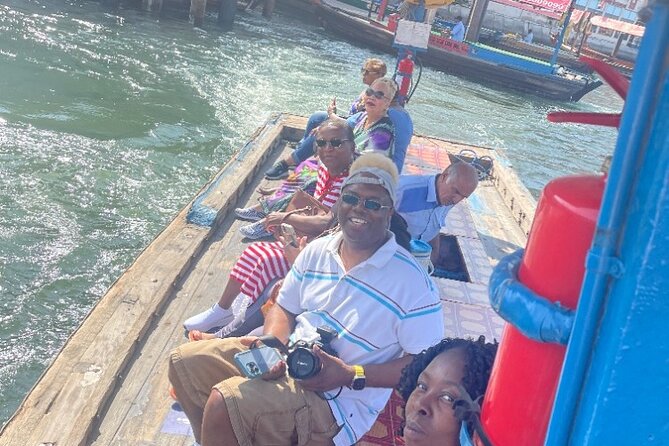
From the museum, the group walks toward the abra station. This portion takes about 10 minutes, passing through the Textile Market.
The market adds a useful change of scene. You see goods associated with India, Pakistan, and local commerce while moving from the old residential quarter toward the water. It is not presented as a dedicated shopping session, so the value here is the transition and the guide’s explanation, not a long browse through individual stalls.
The route is short, but it helps you understand how the neighborhoods connect. Old Dubai is best appreciated as a working trading area, and this walk links homes, markets, boats, and souks in a logical sequence.
The streets and market lanes can be distracting, especially if shopkeepers invite you inside. Keep the group in sight, and ask the guide before making purchases if you want advice about prices or products. The tour does not include shopping, and any purchases are extra.
The abra crossing: ten minutes on Dubai Creek
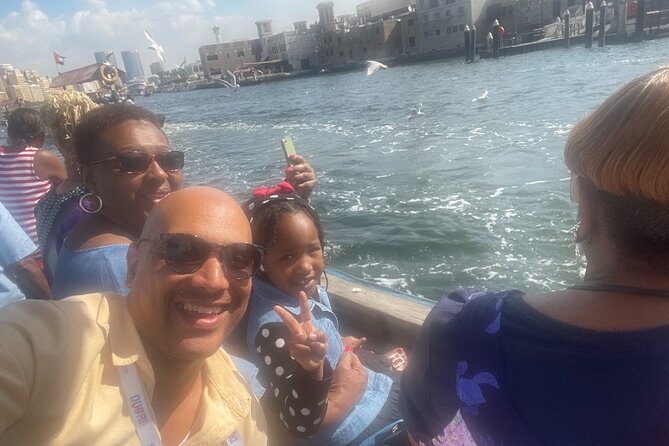
At the creek, you board an abra to cross to the Deira side. The crossing is scheduled for about 10 minutes, and the ticket is listed as free.
This is a short ride, but it is one of the tour’s most memorable pieces. You are not simply being driven between attractions. You are using a traditional water crossing that has long connected the two sides of Dubai Creek, with the souks waiting at the other end.
I like this part because it resets the pace. After the old lanes and museum rooms, you get open air, water, and a clear sense that the creek remains central to the shape of Old Dubai. It also saves you from retracing your steps through Bur Dubai.
The information does not specify seating, waiting time, or conditions at the station. The actual crossing may be brief, but boarding can add time depending on the flow of people. Keep your belongings secure and have your camera ready, since the ride itself is included but not repeated.
Spice Souk: scents, dates, and narrow lanes
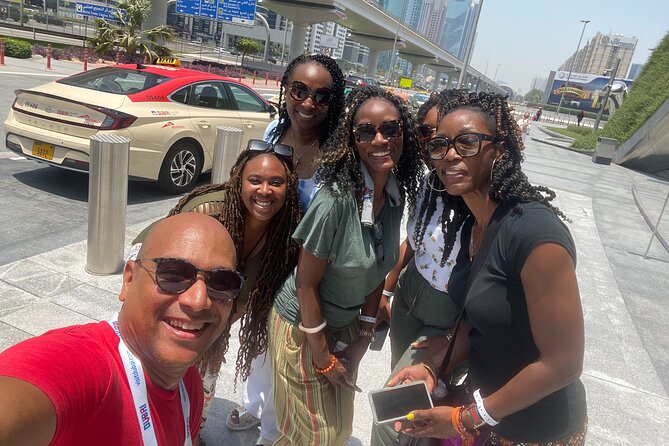
Once you reach Deira, the tour enters the Spice Souk. The scheduled visit lasts about 30 minutes.
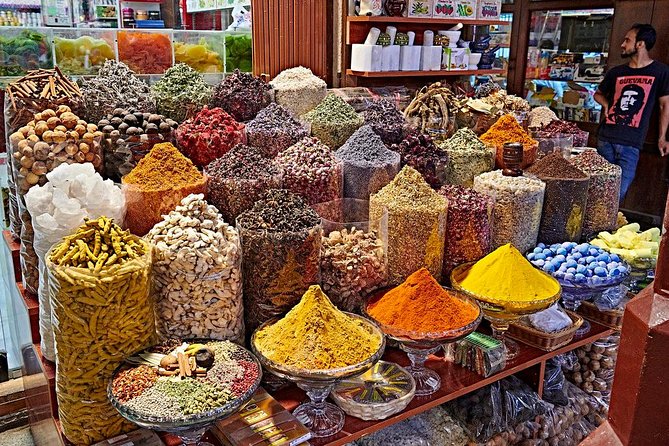
The guide points out spices and explains some of their uses and benefits. You also taste Emirati dates and walk through the souk’s small alleys, where the smells become part of the experience. This is a stronger cultural stop than simply being told where to shop, because the guide gives you a way to understand what you are seeing.
Thirty minutes lets you sample the atmosphere and ask questions, but it is not a relaxed shopping window. If you want to inspect products carefully, compare prices, or buy spices to take home, plan to return after the tour.
You may encounter sales pitches. That is normal in a market built around trade, but do not feel obliged to buy anything. Ask the guide about products, quantities, and prices, then make your own decision. The tour does not include purchases, and the price of the tour covers no extra items beyond the listed inclusions.
Gold Souk: a dramatic final stop
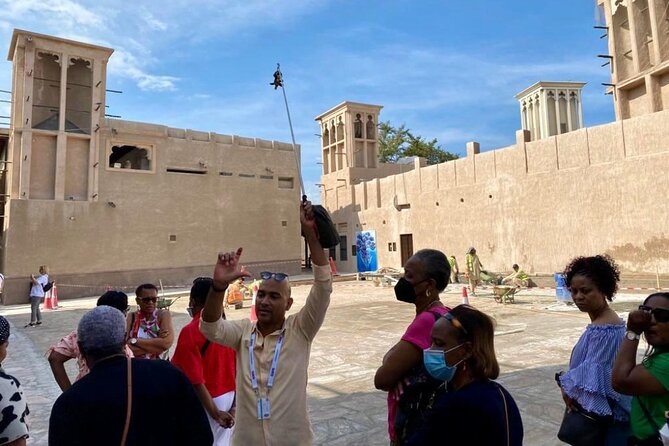
The Gold Souk is only a few meters from the Spice Souk, according to the route description. You spend around 30 minutes seeing the displays and watching shoppers compare jewelry and negotiate deals.
Even if you have no intention of buying gold, this is an entertaining place to finish. The scale and display style are different from the spice lanes, and the guide can explain how the market works while you look around.
Again, half an hour is an introduction, not a buying appointment. If you shop, remember that the tour provider does not list gold purchases, bargaining assistance, or any other shopping service as included. Keep your expectations practical and do not confuse a guided orientation with a guarantee of the lowest price.
The ending is flexible. You may remain in either the Spice Souk or Gold Souk after the group portion finishes. If you prefer to continue sightseeing elsewhere, the guide can show you how to reach Ras Metro Station on Dubai Metro’s Green Line.
What the $25 price really gives you
At $25 per person, this tour is priced well for a small guided introduction to Old Dubai. You receive a professional guide, the organized route, a water bottle, the coffee tasting, the date tasting, and the abra crossing. The museums and named stops are listed without extra admission charges.
The value is not in the number of hours. The schedule gives roughly 140 minutes across the listed stops, not counting meeting time, walking between places, waiting, and the boat ride. The real benefit is having someone explain the connections between Al Fahidi, the markets, the creek, and Deira.
I would book it if you have only one morning for Old Dubai and want help making sense of the area. I would not book it as your only plan if you prefer long museum visits, extended shopping, or a slow photographic walk.
The group limit of eight improves the value. A guide can answer individual questions more easily, and you are less likely to lose the thread of the explanation in a crowd. The experience is also suitable for most people, according to the supplied information, and it is near public transportation.
Guide quality and the human side of the tour
The strongest praise centers on the guides rather than on a single landmark. Mahmoud is described as friendly, organized, patient, and exceptionally informed about Dubai and Abu Dhabi. Alex is praised for hospitality and detailed cultural explanations, while Mohammad is described as professional and helpful.
Those comments suggest a tour built around conversation. You are encouraged to ask questions, and the guide is expected to add photos and information during the walk. That can make a major difference in Al Fahidi, where a building can look attractive but mean little without context.
The names in the supplied material vary, including Mahmoud, Mahmood, Alex, Mohammad, and Pri. This may reflect different guides or different spellings, so confirm who will lead your departure if a specific guide matters to you. The consistent point is the guide’s warmth, organization, and ability to make the history of Dubai accessible.
Who should book this Old Dubai walk?
I recommend it for first-time visitors who want a clear introduction to Dubai beyond malls and modern towers. It also suits solo visitors, couples, and small families who prefer a guide but do not want a large coach group.
The route is a good fit if you enjoy:
- Old neighborhoods and traditional architecture
- Short cultural tastings
- Markets and informal shopping
- A small-group format
- Asking questions as you walk
- Using public transportation after the tour
I would be more cautious if you dislike sales activity, hot weather, uneven walking routes, or short visits. The tour moves steadily, and you will not have unlimited time at every museum, market, or shop.
Book for a morning with good weather. The activity may be rescheduled or refunded if poor weather cancels it, and a minimum group size is required. For a full refund, cancel at least 24 hours before the 9:00 am start time. Last-minute changes or cancellations are not accepted under the stated policy.
Should you book this Dubai walking tour?
Book it if you want an affordable, human-scale look at Old Dubai in one connected route. Al Fahidi, the coffee tasting, the fort, Textile Market, abra crossing, Spice Souk, and Gold Souk make a satisfying half-day outline, even though the supplied duration is described as two days.
The biggest reason to choose it is the guide. A good explanation turns old houses and market goods into a story about family life, hospitality, trade, and the creek. The main reason to hesitate is the unclear Day 2 entry and the short timing at some stops.
Before paying, confirm the exact duration, the guide assigned, and the status of Dubai Museum. If those details suit your plans, $25 is a fair price for a small-group introduction to the city’s older neighborhoods.
FAQ
Where does the Dubai walking tour begin?
It begins at Arabian Tea House Restaurant & Cafe in Al Fahidi, opposite the Musalla Post Office on Al Fahidi Street, Bur Dubai.
What time does the tour start?
The stated start time is 9:00 am.
Where does the tour finish?
The route finishes at Dubai Gold Souk in Deira, in the Al Ras area.
How long does the experience last?
The tour summary lists a duration of approximately two days, but the detailed schedule places the main named stops on Day 1 and includes a vague 10-minute entry for Day 2. Confirm the exact schedule before booking.
Is the tour conducted in a large group?
No. The activity has a maximum of eight participants.
Is the abra ride included?
Yes. The itinerary includes an abra ride across Dubai Creek, with the ticket listed as free.
Is food or drink included?
A bottle of water is included. The route also includes an Arabian coffee tasting and Emirati dates. Other extras are not included.
Does the tour visit Dubai Museum?
Yes. Dubai Museum and Al Fahidi Fort are scheduled for about 30 minutes, with admission listed as free.
Can I stay in the souks after the tour?
Yes. You may remain in either the Spice Souk or Gold Souk after the guided portion ends.
How can I reach the metro after the tour?
The guide can show you how to reach Ras Metro Station on the Green Line of the Dubai Metro.
Can I cancel for a full refund?
Yes, if you cancel at least 24 hours before the experience start time. Poor weather or failure to meet the minimum number of participants may lead to a rescheduled date or full refund.
Just added around Dubai
- Abu Dhabi and Ferrari World Tour★ 3.5 · 9 reviews
- Premium Desert safari With Dune buggy camel ride BBQ dinner★ 5.0 · 36 reviews
- Night City Tour of Dubai★ 4.5 · 14 reviews
- FLYBOARD 30mn session @ POPEYE JETSKI★ 5.0 · 80 reviews
- Full Day Hatta Mountain Tour from Dubai★ 5.0 · 23 reviews
- Sky Views Dubai with Options★ 4.5 · 17 reviews
- Dunes Safari Sandboarding and Photography in Desert★ 5.0 · 47 reviews
- Dubai Sunrise / Morning private safari tour★ 5.0 · 18 reviews
Museums, compared.
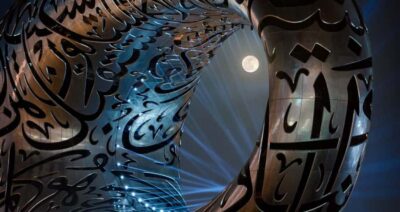
Old Town, Creek, Museums, Souks, & Street Food Tour
Read our review →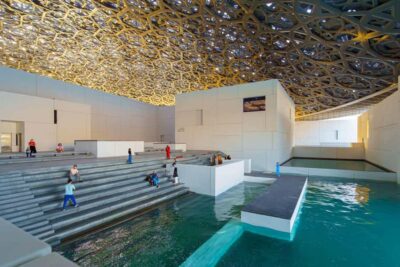
Abu Dhabi Grand Mosque & Louvre Museum Full-Day
Read our review →


Abu Dhabi Day Tour with Grand Mosque & Louvre Museum
Read our review →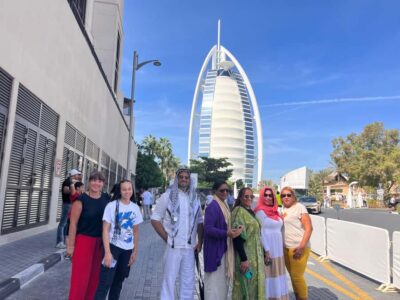
Future Museum, Burj Al Arab, and Dubai Frame Tour
Read our review →
Also listed under