
Reviewed · HISTORICAL TOURS
Dubai: Al Fahidi Historical District Heritage Tour
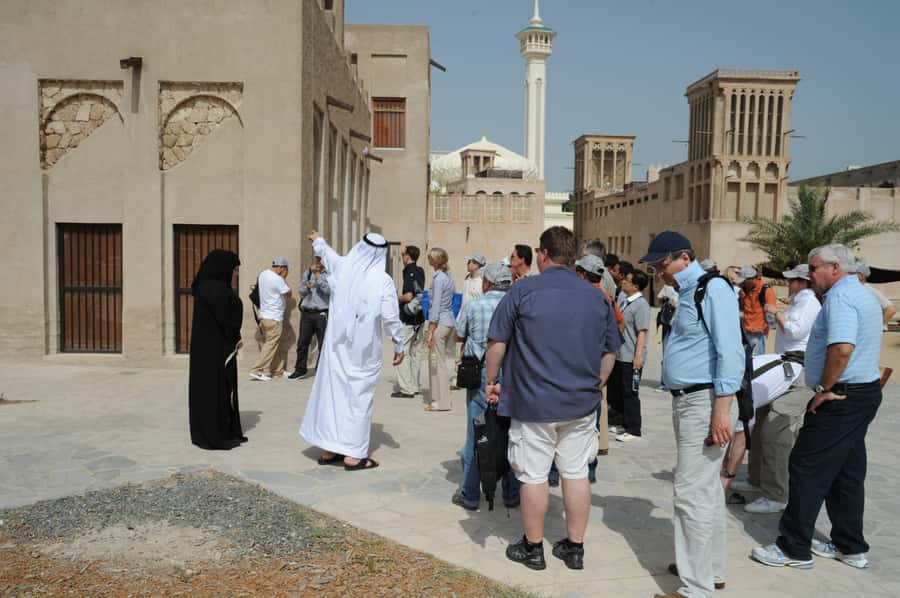
Dubai’s older face still survives. This 90-minute tour takes you through Al Fahidi Historical District, where windtower houses, narrow lanes, and a small mosque visit show you Dubai before skyscrapers took over. I like the open question-and-answer session at the Sheikh Mohammed Center for Cultural Understanding, and I like the simple welcome of Arabic coffee and dates. The main consideration is that much of the experience centers on conversation, so it may feel too slow if you want a nonstop walking tour.
You meet at the SMCCU windtower house and return there for coffee, dates, and more cultural discussion. The tour is especially useful if you want a clearer view of Emirati customs and Islam, but the short length means you should not expect a full tour of every corner of the district.
In This Review
- Key points to know before you go
- Why Al Fahidi feels different from modern Dubai
- Starting at the SMCCU windtower house
- Walking through Al Fahidi’s traditional buildings
- Entering the Ruler’s Court Mosque
- Arabic coffee, dates, and the best questions to ask
- What the $31 price really covers
- Who should choose this 1.5-hour tour
- Practical ways to get more from the experience
- Should you book the Al Fahidi Heritage Tour?
- FAQ
- Where does the tour meet?
- How long does the tour last?
- What language is the tour conducted in?
- Is the tour wheelchair accessible?
- What is included in the price?
- Can I enter the Ruler’s Court Mosque during the tour?
- Do I need special clothing for the mosque visit?
- Can I cancel for a full refund?
Key points to know before you go
- Windtower houses: See the traditional cooling towers that helped homes stay more comfortable before modern air-conditioning.
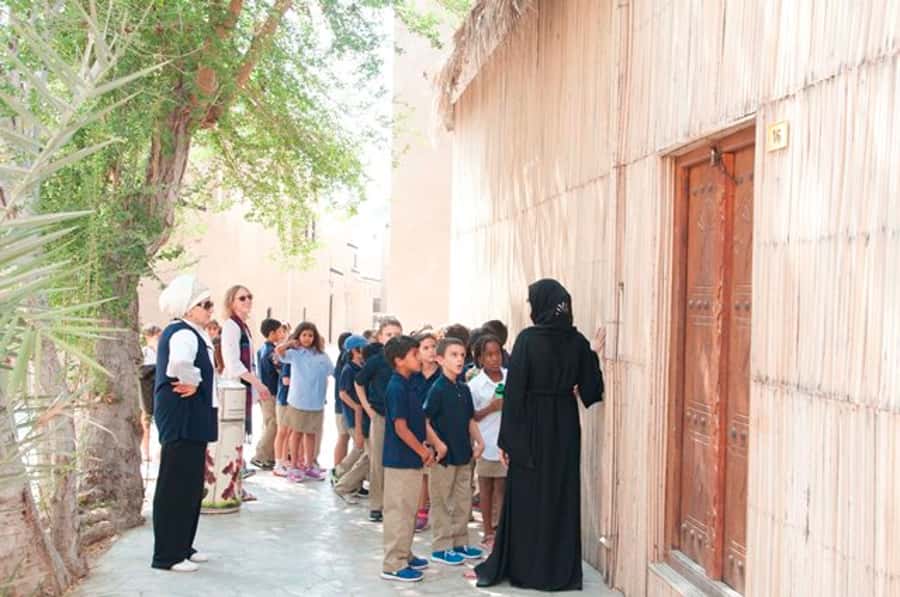
- Ruler’s Court Mosque: Enter a mosque area normally open only to people taking part in an SMCCU program.
- Open cultural questions: Ask directly about religion, customs, daily life, and local traditions in a setting designed for honest discussion.
- Emirati welcome: Arabic coffee and dates make the visit feel personal rather than purely academic.
- Short and accessible: The tour lasts 1.5 hours, is conducted in English, and is wheelchair accessible.
- Best for curious visitors: Choose it for cultural context and conversation, not for a long sightseeing walk.
Why Al Fahidi feels different from modern Dubai
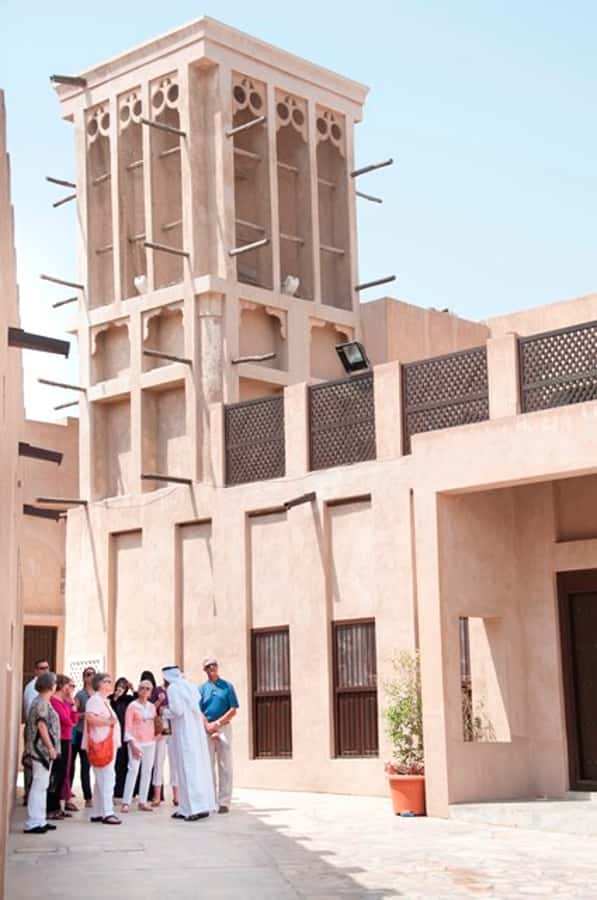
Dubai is famous for glass towers, artificial islands, luxury malls, and wide roads. Al Fahidi gives you another story. This is one of the oldest parts of the city, tied to the Creek settlement that existed before Dubai became a global business and tourism center.
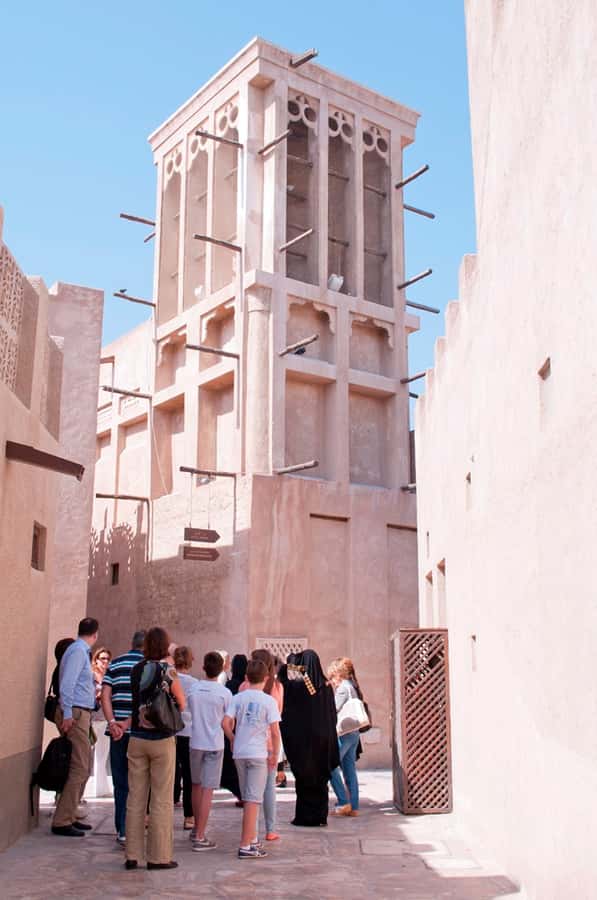
The district’s older buildings use a much more practical style. The windtower houses are the key feature. These towers were designed to catch air and help move it through the home, a clever response to the hot climate before electric cooling became common.
I like this part of the tour because the architecture is not presented as decoration alone. Your guide connects the buildings to daily life. You learn why the houses were built this way and how the Creek settlement developed. That context helps you see Al Fahidi as a place where people lived and worked, not just as a preserved photo stop.
The district also gives you a useful pause from Dubai’s polished modern image. You will not be looking at futuristic towers here. Instead, you will focus on walls, courtyards, windtowers, and the shape of an older neighborhood.
That change of pace is the point. If you want a quick list of famous sights, this tour may feel quiet. If you want to understand how Dubai began, the setting does real work.
A few more Dubai trips worth comparing
- Dubai Evening Heritage Safari by Vintage G Class Al Marmoom Oasis
★ 5.0 · 1,500 reviews - Dubai Camel Desert Safari, Traditional Meal & Heritage Activities
★ 5.0 · 937 reviews - Dubai: Heritage Safari in Vintage Land Rover with Dinner
★ 4.8 · 861 reviews
Starting at the SMCCU windtower house
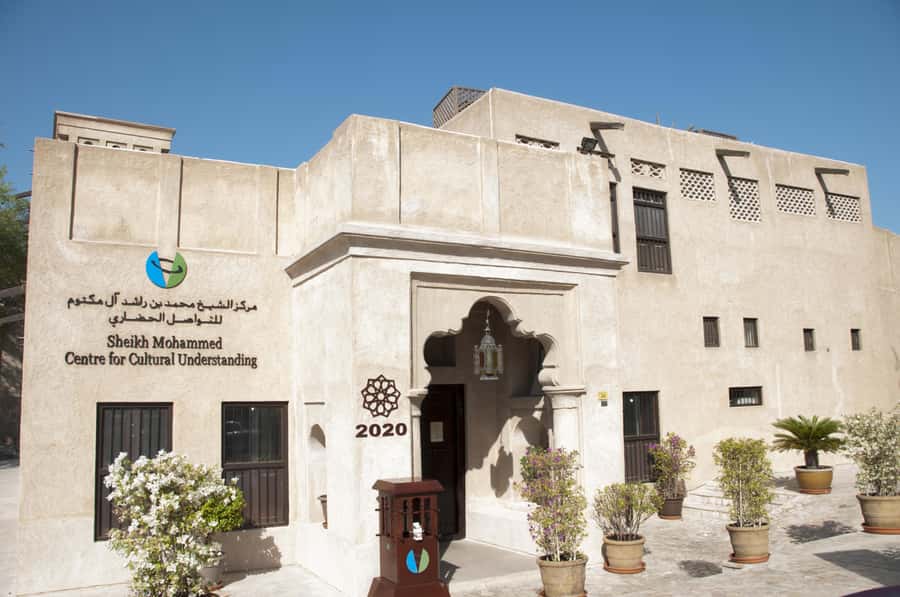
The meeting point is the Sheikh Mohammed Center for Cultural Understanding, usually shortened to SMCCU. It is located at House 26 on Al Musallah Road, near the Al Seef roundabout in Bur Dubai. The house is adjacent to The Ruler’s Court, near the British Embassy, and just behind the Al Seef roundabout.
This location matters because the tour begins inside the kind of traditional building you are there to understand. You are not simply meeting at a modern ticket booth and then being driven elsewhere. The setting starts the lesson before the guide says much at all.
The SMCCU’s guiding idea is Open Doors. Open Minds. The center works to explain local culture, customs, and religion while encouraging direct conversation between local people and international visitors. That makes the tone different from a standard sightseeing commentary.
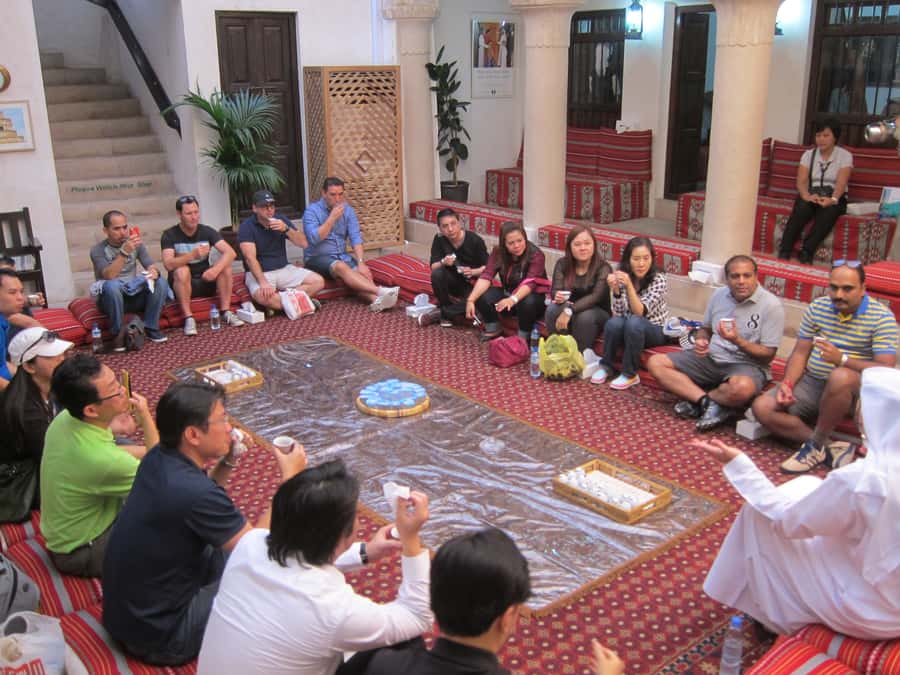
You can expect a traditional Emirati welcome at the start. The welcome is not a large performance or a long ceremony. Its value is that it creates a relaxed setting for questions. You are encouraged to ask about life in the Emirates, including topics that may feel difficult to raise on your own.
This is one of the strongest parts of the experience. A guide can tell you that a custom exists, but a conversation can explain why it matters. You can ask for clarification, compare it with your own culture, and keep the discussion focused on what you actually want to understand.
Walking through Al Fahidi’s traditional buildings
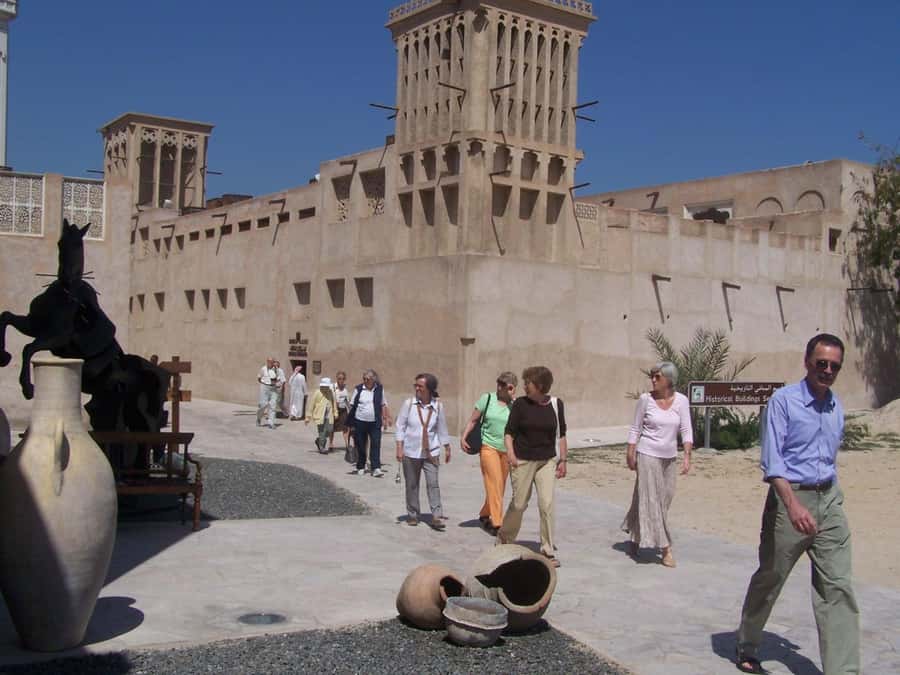
After meeting at the center, you stroll through Al Fahidi Historical District with a seasoned English-speaking guide. The walk explains the architecture and the story of Dubai’s Creek settlement buildings.
The tour is not designed as a long-distance march. It is a compact introduction, with time for explanations and questions. That makes it manageable if you have limited time in Dubai or want a cultural activity that does not take up half a day.
Pay attention to how the buildings are grouped and shaped. The windtower houses are the most memorable feature, but the wider value comes from seeing how architecture responded to climate, family life, and the needs of an early settlement.
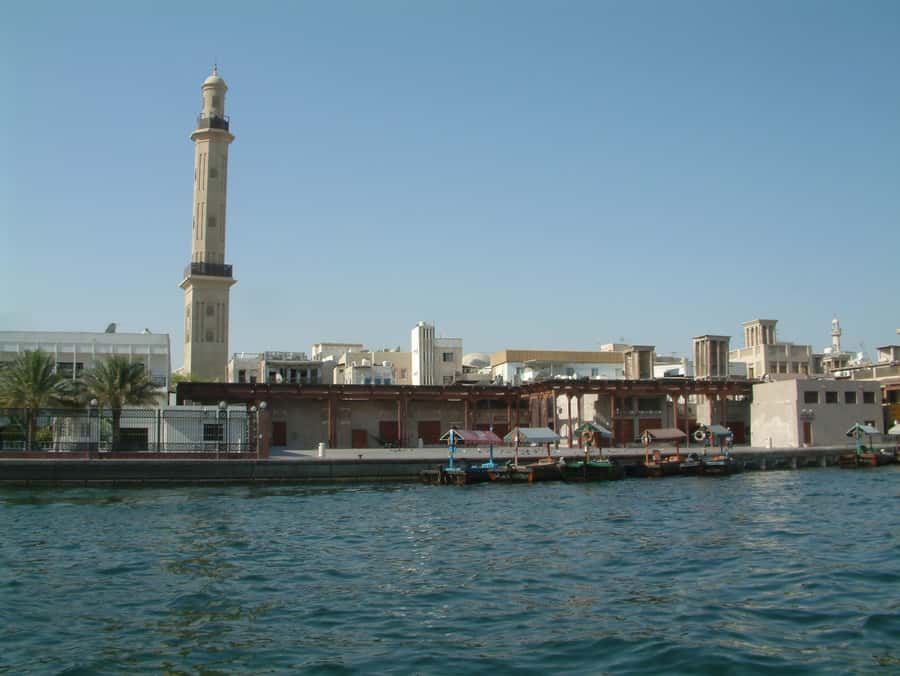
You will hear about Dubai before the city was dominated by high-rise buildings and manmade islands. That comparison gives the district its emotional pull. Modern Dubai did not appear from nowhere. It grew from a smaller Creek community, and Al Fahidi helps you picture that earlier chapter.
The walking portion may be shorter than you expect. One past participant felt the experience involved about an hour of sitting and talking before the mosque visit, and left before reaching the mosque. That is a useful warning, not a flaw for everyone. The tour’s focus is cultural understanding, with walking used to support the discussion.
If your main goal is to wander every lane and photograph as many old buildings as possible, allow extra time before or after the tour for your own exploration. The guided visit gives you meaning and access, but it is not a full neighborhood walking circuit.
Entering the Ruler’s Court Mosque
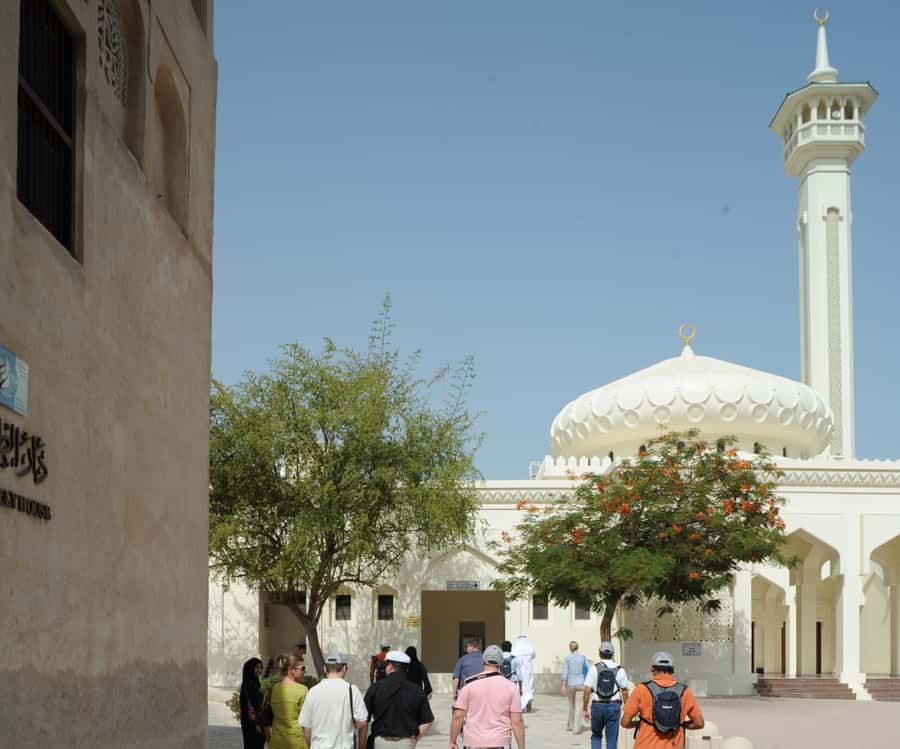
The tour continues to the Ruler’s Court Mosque. A short discussion explains the mosque’s place in Emirati life and gives you a chance to understand more about Islam in a local setting.
The access is notable. The mosque is open to people taking part in an SMCCU program, making this more than an exterior photo stop. You receive an explanation of the space and its role rather than simply stepping inside without context.
The mosque section is brief, so keep your expectations realistic. This is not a long religious lecture or a broad study of Islamic architecture. It is a focused conversation that connects the building to everyday Emirati life.
For many people, this will be the most meaningful part of the experience. A past participant specifically praised the insight into Islam. That makes sense because the setting gives you a respectful way to ask questions about religion, practice, and community life.
Appropriate clothing matters during the mosque portion. The SMCCU provides attire that you can borrow, so you do not need to worry if your clothing is not suitable for entry. Still, dressing modestly is a sensible way to show respect and avoid fuss.
The mosque visit also helps explain why the cultural center’s approach works. You are not only looking at a religious building. You are given a chance to discuss what the mosque means within Emirati society, which is more useful than memorizing a few architectural terms.
Still Dubai, at a slower pace:
- Dubai: Burj Khalifa Levels 124 & 125 Entry Ticket + Options
★ 4.3 · 90,891 reviews - Dubai: Desert Safari, Quad Bike, Camel Ride & Al Khayma Camp
★ 4.9 · 68,962 reviews - Dubai: Desert Safari, Quad Bike, Camel Ride and Sandboarding
★ 4.9 · 43,505 reviews - Dubai: Safari, Quad Bike, Camel Ride, and Buffet Dinner
★ 4.9 · 33,424 reviews
Arabic coffee, dates, and the best questions to ask
After the mosque discussion, you return to the SMCCU windtower house for Arabic coffee and dates. This is a small detail, but it gives the tour a warm finish.
Arabic coffee is part of the traditional welcome, and dates are served alongside it. The pairing makes the setting feel rooted in hospitality rather than arranged only for sightseeing. You are sharing a familiar local custom while continuing the conversation.
This is also the right time to ask questions. The center encourages you to ask about life in the city, local customs, religion, and the realities of living in the Emirates. No question is treated as off limits, provided it is asked respectfully.
I would arrive with a few questions ready. You might ask how traditional homes dealt with heat, how customs have changed with Dubai’s growth, or how religion shapes everyday life. The supplied information does not promise that every question will receive a long answer, but the format is clearly built around direct discussion.
The center also explains its award-winning programs and its effort to improve communication between local people and international visitors. That gives the coffee stop a purpose beyond refreshments. You are learning how the institution approaches cultural exchange.
Still, this part requires the right mindset. If you prefer to keep moving, sitting for an extended cultural discussion may test your patience. One participant expected more walking and found the discussion did not match what they wanted. Read the tour as a conversation-led experience, and you will have a better idea of what you are booking.
What the $31 price really covers
At $31 per person, this is not the cheapest way to see an old Dubai neighborhood. You can walk through parts of Al Fahidi on your own. The price makes more sense when you count the added access and explanation.
Your fee includes a guided tour of the district, entrance to the SMCCU, access to the Ruler’s Court Mosque, and Arabic coffee with dates. The mosque access is a key part of the value because it is limited to people taking part in an SMCCU program.
You are also paying for a structured cultural exchange. A self-guided walk can show you old walls and windtowers, but it cannot answer questions about customs or religion as they arise. The guide gives the buildings a human context and helps you understand why the district matters.
The value is strongest for first-time visitors to Dubai, people interested in Islamic culture, and anyone who wants more than shopping, beaches, and modern architecture. It is weaker for someone who already knows the area and wants a long photographic walk.
The high score of 4.8 from 40 ratings supports the idea that the experience usually delivers what its main audience wants. The strongest praise focuses on learning, cultural understanding, and the quality of the overall experience. Several people describe it as very interesting, highly informative, or among the best things they did in Dubai.
That praise should not hide the tradeoff. The tour is short, and its conversation-based format will not suit every sightseeing style. At $31, I would book it for access and insight, not for the amount of ground covered.
Who should choose this 1.5-hour tour
I would recommend the tour to you if you want a calm introduction to Emirati culture. It works well early in a Dubai visit because it gives you background that can improve the rest of your time in the city.
It is also a strong choice if you have questions about Islam, local customs, or traditional life but do not know where to ask them. The SMCCU setting is built for that kind of exchange.
Families and mixed-interest groups may find the short duration useful. The experience is wheelchair accessible, and it does not require a full day of walking. English is the tour language, so you should be comfortable following an English-speaking guide.
I would be more cautious if you want a guide who keeps moving from sight to sight. The experience includes walking, but conversation is a major part of it. The mosque visit comes after the discussion, and the schedule leaves room for sitting and questions.
You should also avoid treating this as a complete history of Dubai. It is an introduction focused on Al Fahidi, traditional architecture, Emirati hospitality, and cultural understanding. That focused approach is a benefit if you want clarity, but a limitation if you want a broad city tour.
Practical ways to get more from the experience
Arrive ready to participate. The center’s format rewards curiosity, and a few thoughtful questions will make the session more useful than simply listening.
Wear clothing that allows you to enter the mosque respectfully. The SMCCU provides borrowable attire for the mosque portion, but modest clothing remains the easiest option.
Plan your schedule around the full 1.5 hours. Do not assume the activity is only a brief walk through old streets. The discussion is central, and leaving early may mean missing the mosque visit and the coffee and dates at the center.
If you want more time for photographs, add your own visit around the scheduled experience. The guided portion gives you explanations and special access. Your independent time can handle the slower business of wandering, looking closely at buildings, and taking pictures.
The tour has free cancellation up to 24 hours before the start time, and you can reserve now while paying later. Those policies are useful if your Dubai plans are still shifting, though the main decision should be based on the format rather than the flexibility.
Should you book the Al Fahidi Heritage Tour?
Book it if you want to understand Dubai through its older homes, religious life, and tradition of hospitality. The combination of Al Fahidi’s windtower architecture, the Ruler’s Court Mosque, Arabic coffee, dates, and direct cultural questions gives you much more context than a quick photo walk.
Skip it if your priority is constant movement or a wide-ranging tour of Dubai. The walking is limited, and the conversation can take up much of the experience.
For most first-time visitors, $31 is fair because it includes special mosque access and a guided cultural exchange in the SMCCU’s traditional house. I would choose this tour for insight, not spectacle. It is a short, thoughtful counterpoint to Dubai’s modern skyline, and that contrast is exactly why it earns a place in your schedule.
FAQ
Where does the tour meet?
The meeting point is the Sheikh Mohammed Center for Cultural Understanding, House 26, on Al Musallah Road near the Al Seef roundabout in Bur Dubai. It is next to The Ruler’s Court, near the British Embassy, and just behind the Al Seef roundabout.
How long does the tour last?
The tour lasts 1.5 hours.
What language is the tour conducted in?
The live tour guide conducts the experience in English.
Is the tour wheelchair accessible?
Yes, the activity is wheelchair accessible.
What is included in the price?
The price includes a guided tour of the Al Fahidi Historical District, entrance to the Ruler’s Court Mosque and SMCCU, Arabic coffee, and dates.
Can I enter the Ruler’s Court Mosque during the tour?
Yes. The mosque is open to people taking part in the SMCCU program, and the tour includes a short discussion about its role in Emirati life.
Do I need special clothing for the mosque visit?
The SMCCU provides attire that you can borrow during the mosque portion of the tour.
Can I cancel for a full refund?
Yes. You can cancel up to 24 hours in advance for a full refund. You can also reserve your place and pay later.
Just added around Dubai
- Abu Dhabi and Ferrari World Tour★ 3.5 · 9 reviews
- Premium Desert safari With Dune buggy camel ride BBQ dinner★ 5.0 · 36 reviews
- Night City Tour of Dubai★ 4.5 · 14 reviews
- FLYBOARD 30mn session @ POPEYE JETSKI★ 5.0 · 80 reviews
- Sky Views Dubai with Options★ 4.5 · 17 reviews
- Full Day Hatta Mountain Tour from Dubai★ 5.0 · 23 reviews
- Dunes Safari Sandboarding and Photography in Desert★ 5.0 · 47 reviews
- Dubai Sunrise / Morning private safari tour★ 5.0 · 18 reviews
Historical Tours, compared.

Dubai Evening Heritage Safari by Vintage G Class Al Marmoom Oasis
Read our review →
Dubai Camel Desert Safari, Traditional Meal & Heritage Activities
Read our review →
Heritage Safari in Vintage Land Rover with Dinner
Read our review →
Abu Dhabi Trip with Lunch at Al Khayma Heritage Restaurant
Read our review →

Heritage Safari, Camel Ride & Al Marmoom Oasis Dinner
Read our review →
Also listed under